1,600 Years of Istanbul, Told Through 200 Objects at the V&A
Opening in London on November 7, the V&A’s Constantinople to Istanbul: One City, Two Empires brings together more than 200 objects spanning 16 centuries. From Byzantine craftsmanship to Ottoman textiles and nineteenth-century European design, the exhibition traces how one city’s artistic influence travelled far beyond its borders.
By İzlem Arsiya
An empire can leave behind many things. Buildings, borders, monuments. But some of its most enduring traces are much smaller: a pattern woven into fabric, a flower painted onto a ceramic tile, a decorative detail borrowed by an artist hundreds of years later.
On November 7, London’s Victoria and Albert Museum opens Constantinople to Istanbul: One City, Two Empires, an exhibition exploring 1,600 years of artistic production in a city that served as the capital of two successive empires.
Realised in partnership with Koç Holding and with support from the Huo Family Foundation, the exhibition draws on the V&A’s own collection and on lenders in Istanbul, Venice, Athens and across the UK.
Many of the works have never been shown in Britain before. Among them are Gentile Bellini’s portrait of Sultan Mehmed II, painted shortly after Venice and the Ottoman Empire had been at war, and the 14th-century Lincoln Typikon, an illuminated Byzantine manuscript on public display for the first time in 60 years.
Bringing together more than 200 objects, from jewellery and manuscripts to textiles, ceramics and architectural fragments, it tells the story of Constantinople and Istanbul through the things its people made, used and left behind.
Across those centuries, the city changed rulers, religions and architectural identities. Yet it remained a meeting point for artists, craftspeople and merchants whose ideas travelled far beyond its borders.
The objects and their stories
These four objects in the exhibition show how far those ideas could travel.
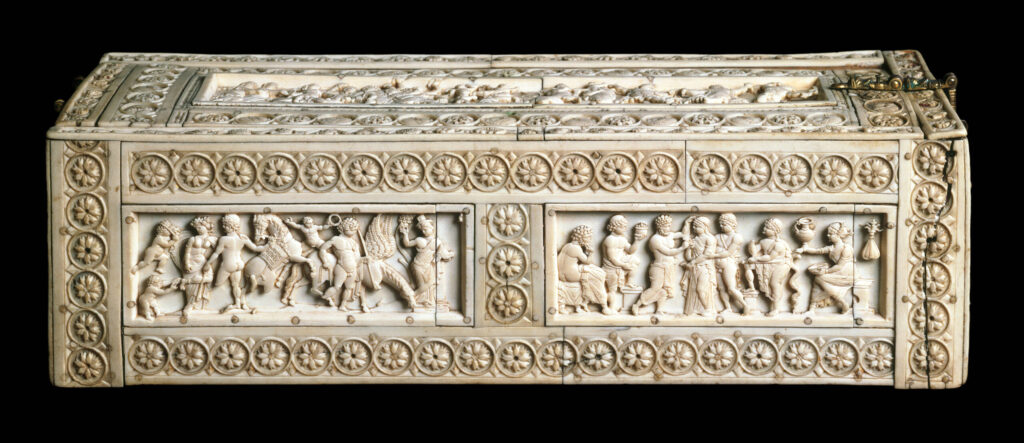
The Veroli Casket was Carved in Constantinople in the tenth century, some six hundred years after the empire became Christain, it is covered with gods, heroes and cupids from Greek and Roman myth. Europa, is among them, carried off by the bull. It shows how comfortably Byzantium’s craftsmen lived with their classical inheritance. The casket takes its name from the cathedral treasury of Veroli, in central Italy, where it was later kept.
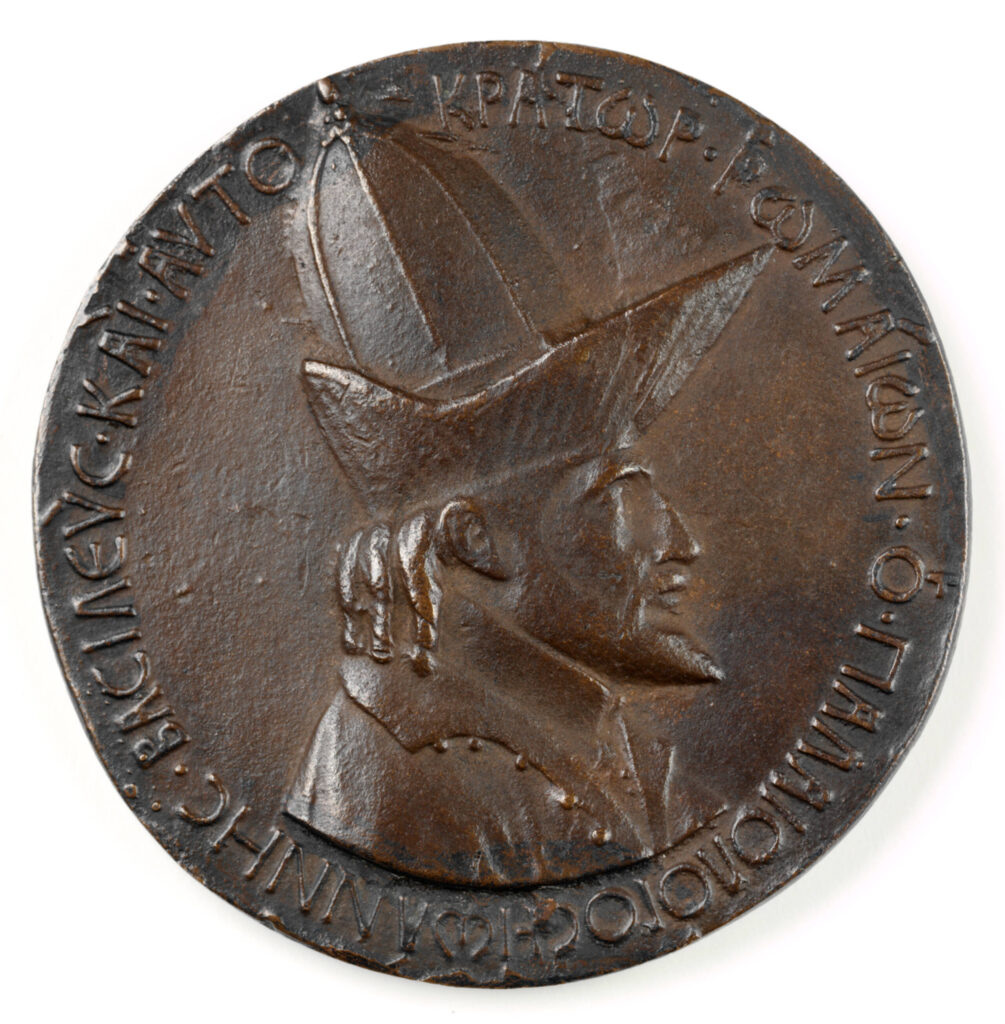
Byzantium’s ties with Italy only deepened. Cast in bronze in 1438 or 1439, Pisanello’s Medal of John VIII Palaiologos is considered the first Renaissance portrait medal. It was made after the Byzantine emperor travelled to Italy for the Council of Ferrara–Florence, hoping that a union of the Eastern and Western churches would bring military help against the Ottomans. The format soon spread across Europe’s courts. Within fifteen years, however, Constantinople had fallen to the Ottomans.
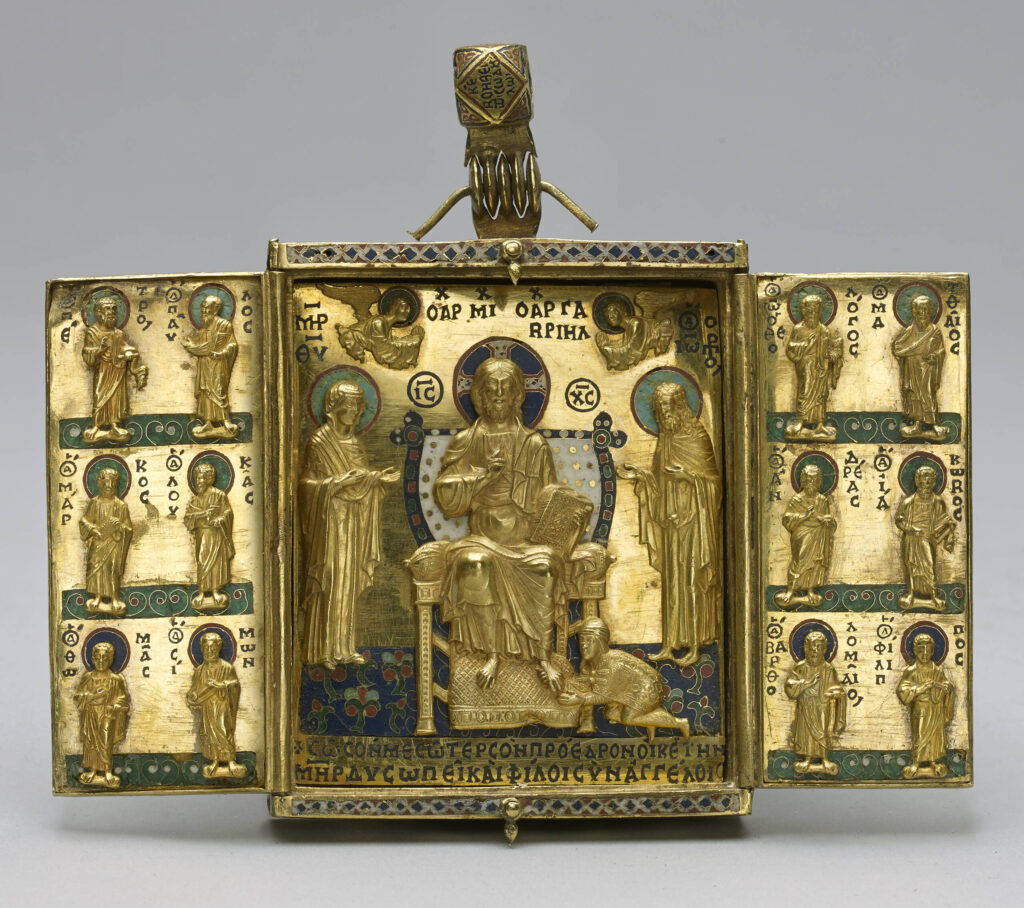
The Enkolpion of Constantinos, proedros, is a small gold triptych made in the Byzantine Empire in the 11th century and designed to be worn around the neck. An enkolpion was a devotional object worn on the chest, and this one is decorated in cloisonné enamel. It shows its owner, a courtier named Constantine, kneeling at the feet of Christ. His title, proedros, was one of the senior ranks at the Byzantine court. The piece is an example of the fine goldsmiths’ work produced in Constantinople, and it shows how faith and status were often bound together in the same object. It is on loan from the Wyvern Collection.
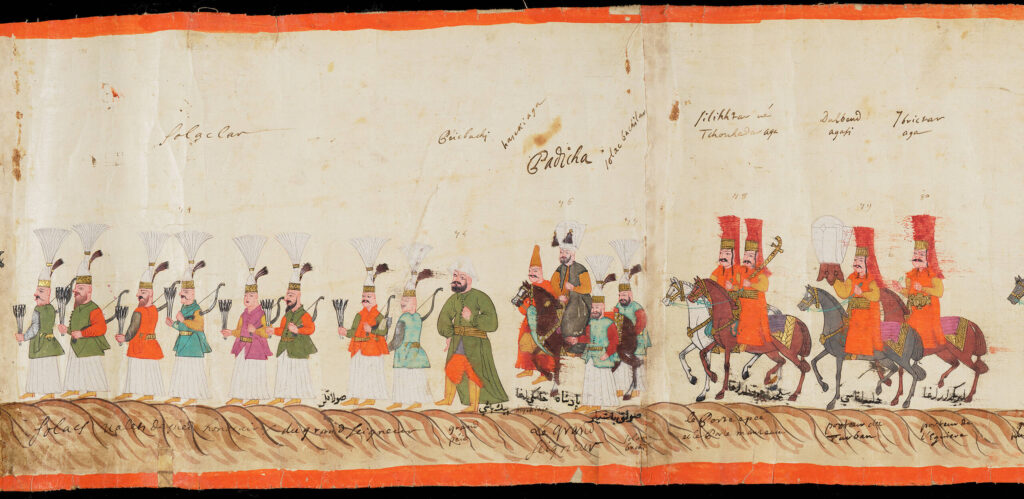
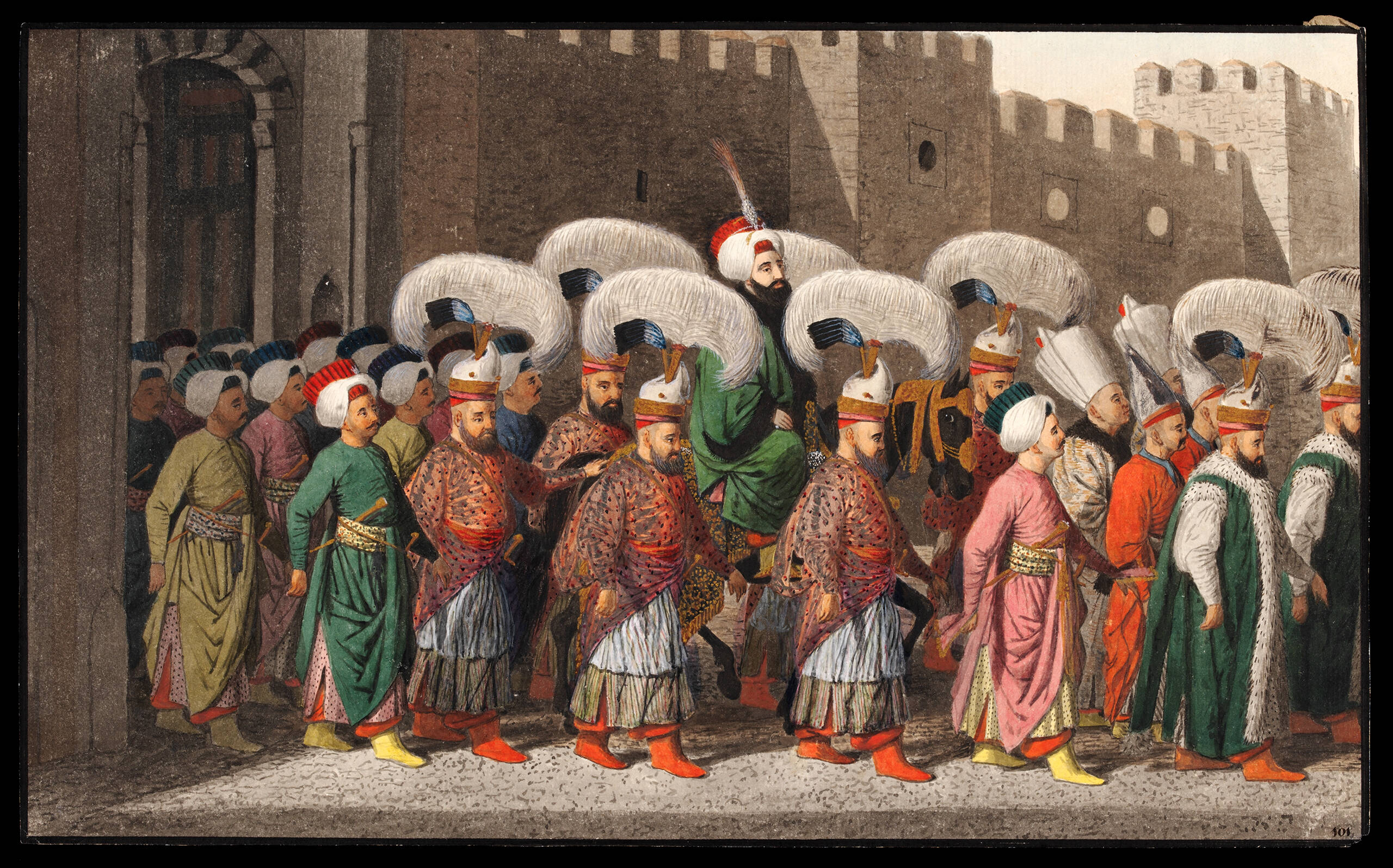
The Ottoman processional scroll is one of the exhibition’s most striking loans. Painted in Istanbul in the seventeenth century, it unrolls to around nine metres and shows the sultan in procession with his officers of state, military commanders and household guard, each figure numbered and named by rank. Later, French captions and Latin-alphabet transliterations were added above the Ottoman Turkish titles, making the parade readable to European eyes. The scroll came to England in the nineteenth century and has been in Manchester’s John Rylands Library since 1908.
These are just four of more than 200 objects that tell the story of a city pushed, pulled, taken and defended time and time again. Yet every change of hands left something behind, and the layers of influence that built up in this one place made it fertile ground for art. Constantinople became Istanbul, but its art refused to stay in one place.