



The Last Affordable Coast
Albania’s coast drew 12 million visitors last year, up from 300,000 two decades ago, and property values have followed, climbing past 100% in some towns while local wages stay flat. This is the story of what gets lost when a place is discovered: the thing that made it worth discovering at all.
by Anamaria Roa
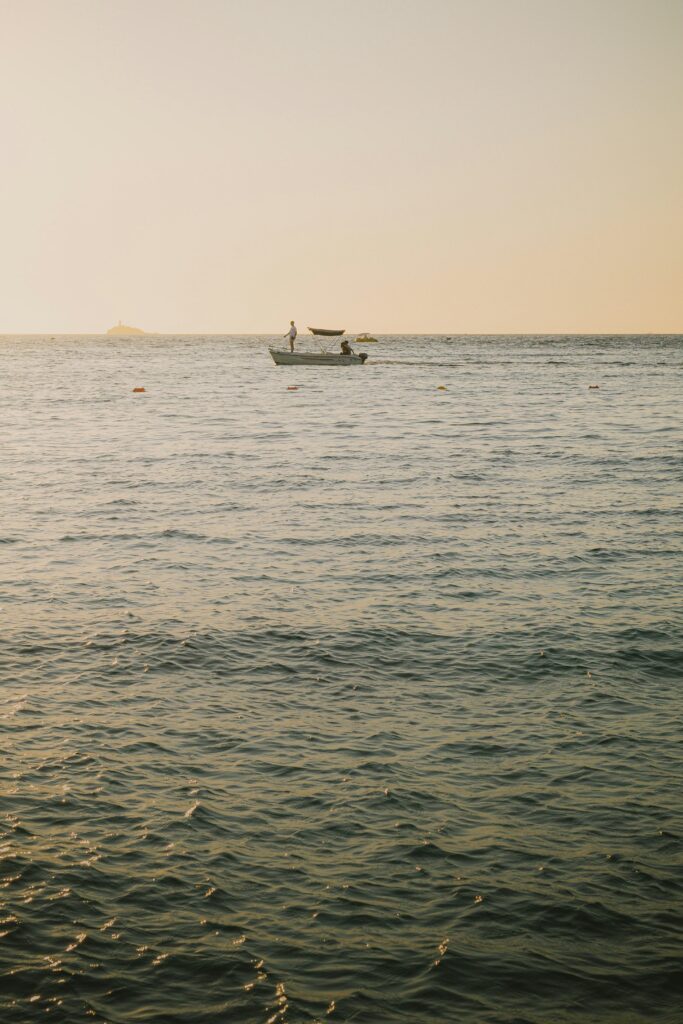
Ksamil was a fishing village. It had a small beach, a handful of families, and boats going out in the early morning. The water was the color of shallow glass. Then someone posted a photograph, and then someone else did, and then a journalist called it the Maldives of Europe, and then it wasn’t a fishing village anymore.
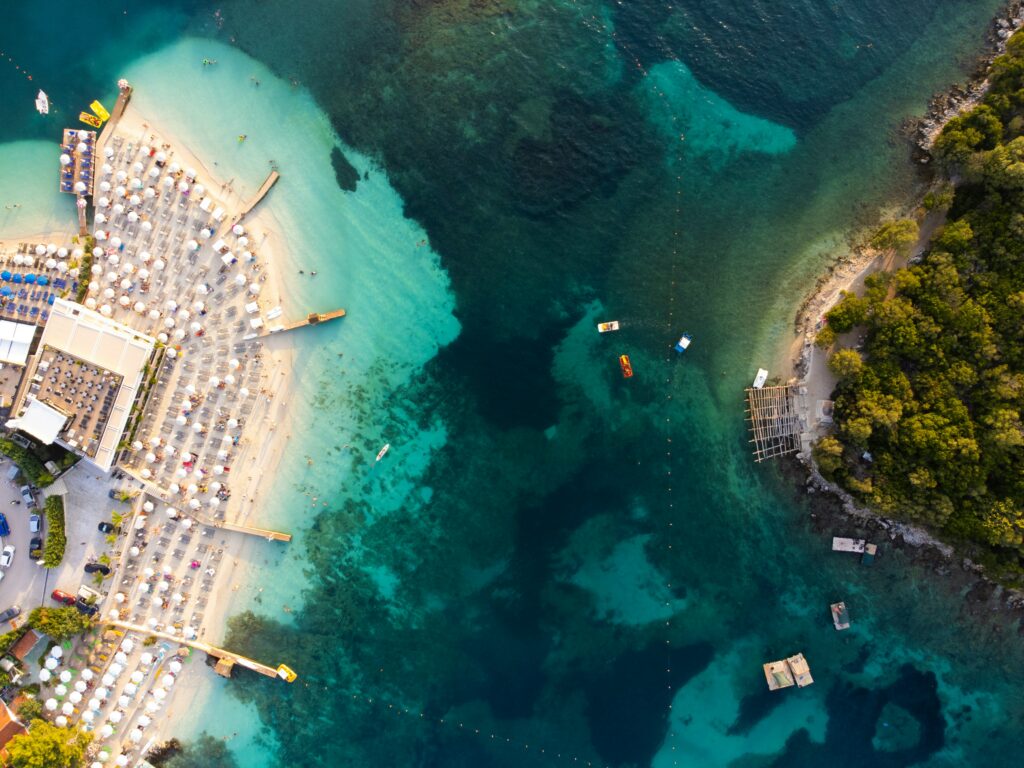
It is still beautiful. The water is still that color. But the boats have been replaced by beach bars charging €14 for a mojito, and the families who fished there are mostly gone, priced out by rental increases that arrived faster than any of them could have planned for. The sun loungers start at the waterline and run back to the promenade without a gap. And somewhere just up the coast, a $1.4 billion luxury resort is being built on what was once a military island, developed in part by Jared Kushner.
This is what happens to the last affordable coast. It stops being one.
The Numbers
Albania received 12.47 million foreign visitors in 2025. For a country of 2.8 million people, that is not a tourism industry. It is a transformation. Tourist arrivals have grown from 300,000 in 2003 to over 12 million today — a 3,000% increase in twenty years. Tourism now accounts for roughly 20 to 38% of Albania’s GDP depending on how you count it. One in five jobs in the country is in the sector.
Economically, this is a success story. It is one of the fastest-growing economies in Europe. The average Albanian wage, around €724 a month, is rising. New infrastructure is being built. The Vlora International Airport opened for commercial flights in 2026, expected to push property values along the southern Riviera by a further 15 to 25%.
Property prices in Ksamil and Saranda have risen between 80 and 110% over the last five years. A sea-view apartment in Saranda now costs between €2,200 and €3,000 per square meter. A weekend at the beach now costs around €510. And this is a basic trip, one with sun loungers, food and a place to sleep. Yet the average Albanian family spends 43.6% of its income on food. A beach weekend costs more than a month’s minimum wage. Technically, Albania’s beaches are free, yet the access is not.
The Ruins of a Fishing Village
The story of the Albanian Riviera is the story of every coast that gets discovered, told faster than usual. A place is remote. It is beautiful and cheap precisely because it has been ignored. A few travelers find it. They tell others. The photographs spread. The infrastructure follows. The local people, the ones who built and belonged first, follow the prices out.
The people who were there first, the ones who made it what it was, follow the prices out.
In Ksamil, one local observer described beach resorts now charging what was unthinkable a decade ago. A waitress from nearby Himarë described serving mojitos at €14 each to tourists while earning a local wage. Locals in Pogradec, another town caught in the same wave, reported paying more for tap water at a tourist bar than for a soft drink.
The Association of Bars and Restaurants estimates that local consumer spending in coastal areas has dropped approximately 20% as restaurants pivot entirely toward visitors.
The Albanian government, to its credit, has acknowledged this. A National Tourism Strategy published for 2024 to 2030 includes proposals to limit the conversion of housing into tourist units, implement temporary price controls during peak season, and require 300 metres of free public beach per kilometre of coast.
Experts have called for policies that protect local communities while allowing the sector to grow. These are the right conversations to be having. Whether the infrastructure to enforce them exists is a different question.
The Pattern
Albania is not the first coast to go through this. And it certainly will not be the last. The Spanish coastline went through the same transformation in the 1970’s. This includes but is not limited to rapid construction, rapid displacement, a permanent alteration of place that you can still see in the concrete hotels that line stretch of Andalusia.
Croatia’s Adriatic coast went through it more recently. Montenegro’s Bay of Kotor is in the middle of it now. Each time, the window between discovery and displacement is shorter, because information travels faster and capital follows immediately behind it.
What is being lost in each case is affordability along with the specific quality of a place that made it worth discovering. The fishing village does not become expensive and remains a fishing village. It becomes something else entirely. The culture that drew people there gets replaced by the infrastructure built to serve the people who came.
The belonging that locals had to their coast, the daily, mundane and deeply rooted kind, the kind that does not require a Michelin star or a sun lounger reservation, gets replaced by the transactional belonging of a holiday.
What Belonging Costs
The question the Albanian riviera is asking, in real time, is the same question every coast eventually asks. Who does this place belong to? The answer, left to the market, is always the same: whoever can afford to pay for it this season.
This is not an argument against tourism. Tourism built the roads, created the jobs, raised the wages, and connected a country that was sealed shut until 1991 to the rest of the world.
These are the real gains, and the Albanian families who have built small hotels and boat businesses and guesthouses along the coast have earned them.
But somewhere in the gap between a €14 mojito and a €724 monthly wage is a question about what it means to belong to a place when the economics of that place have been redesigned around someone else’s summer.
The fishermen who were in Ksamil before the photographs arrived belonged there in a way that no amount of investment can replicate. They knew where the fish ran. They knew which families owned which boats. They knew the beach in November, when no one else was looking at it.
The last affordable coast is always somewhere. And it is always, at the moment you name it, already disappearing.
