


A Love Letter to Burgazada
For Lian Penso, Burgazada has been part of the family for generations. Growing up, she would spend her summers there from beginning to end, arriving for two or three months at a time without leaving the island until it was time to return to the city. She takes us back to the Burgazada of her childhood, shaped by different communities, languages, familiar faces and the small rituals and freedoms of island life.
by Lian Penso
In the middle of the Sea of Marmara, sits Burgazada, the third biggest of the Princes’ Islands. Though it’s just a short ferry ride from Istanbul, it feels worlds apart from the city. Quiet, intimate and deeply rooted in its past, the island has long been shaped by the different communities who have called it home.
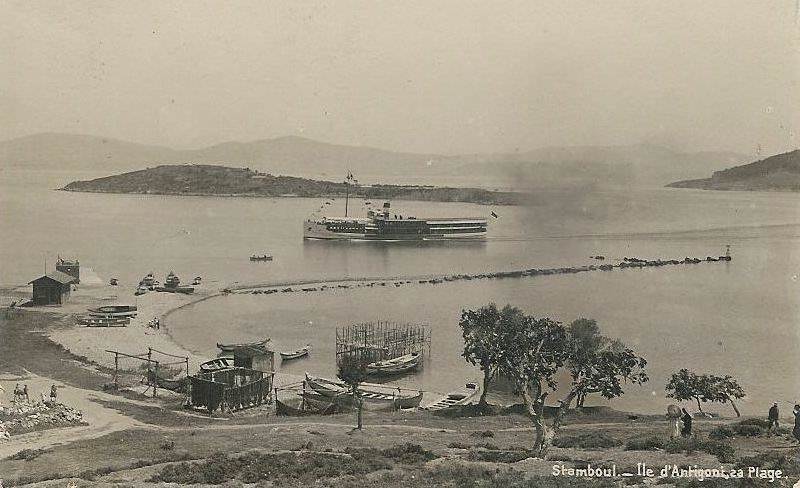
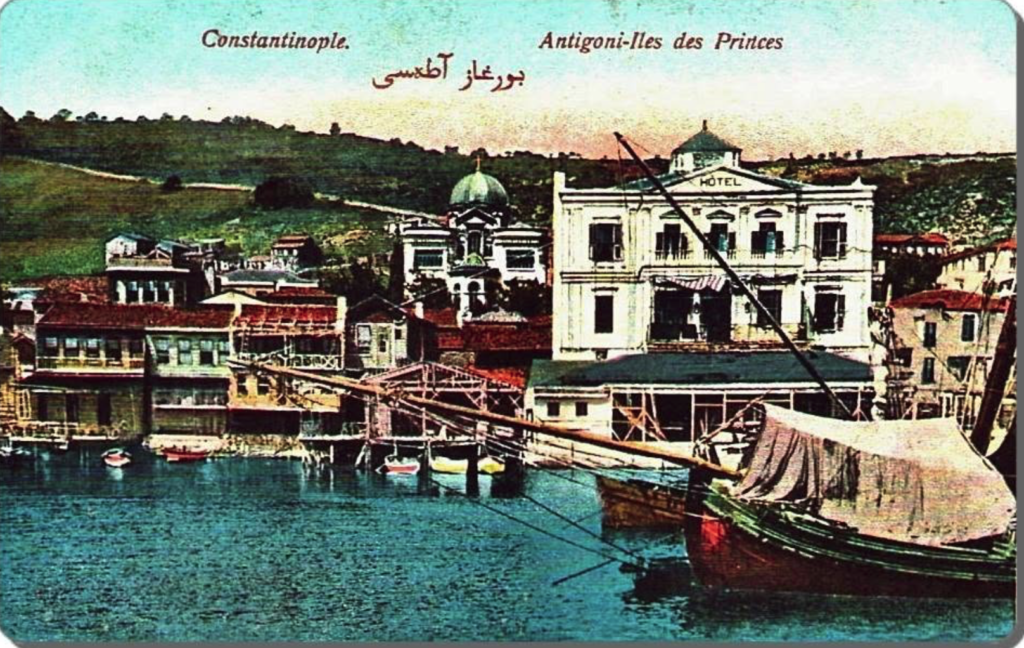
Known as Antigoni in Greek, Burgazada was once predominantly inhabited by Greek families, with gardens, vineyards, churches and wooden houses scattered across its slopes. Its history traces back to the Byzantine period, and over the centuries the island became part of the rich and layered cultural landscape of the Princes’ Islands.
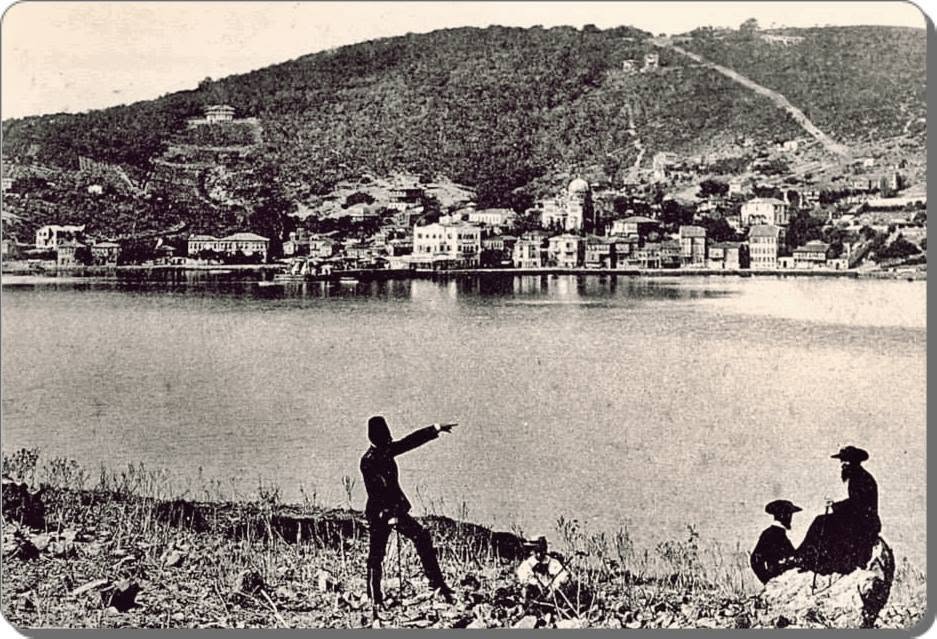
Over the years, you could walk through the island and encounter a Greek Orthodox church, a synagogue, a mosque and a cemevi within the same small neighbourhood. You could go to the market and hear different accents, words and languages. You could meet a family whose roots went back generations on the island, alongside someone whose grandparents had arrived from another part of Turkey, the Balkans or Europe.
Mama, Yaya, Mami
Burgazada is a small island, just 1.5 square kilometres in size, yet its social history is remarkably large. What makes the island unique is not simply that different communities have lived here, but that an extraordinary number of ethnic and religious groups have shared the same small piece of land.
This is something Robert Schild explores in his book A Living Ethnographic Museum: Burgazada. After decades of living on the island, Schild documented the stories of its inhabitants through oral history, speaking with nearly one hundred Burgaz residents and tracing more than twenty different ethnic and religious communities that have, at different times, formed part of the island’s social fabric. His list includes Greek Orthodox and Catholic Greeks, Armenians, Sephardic and Ashkenazi Jews, Karaites, Levantines, Alevis, Sunnis, Kurds, Germans, Austrians, Maltese, Syriacs, Chaldeans and families with roots across the Balkans and the Mediterranean.
You could hear this diversity in the market. Different languages and dialects have been spoken on the island over the years, and Ladino was among them. As children, we would laugh at expressions such as “Es vapor esta yanaşeyando,” a playful mix of Ladino and Turkish meaning, roughly, “the ship is coming in.” On the streets, you might also hear Greek and Armenian families calling their mothers and grandmothers yaya or mama, words that belonged so naturally to everyday speech that, as a child, I never thought of them as traces of a larger history.
For a child growing up here, this diversity did not feel like history. It was simply Burgazada. It was the languages heard at the market, the church bells and the call to prayer, the different names people used for the same things, and neighbours whose families came from somewhere else but whose lives had become deeply rooted in this small island.
Being a Child in Burgazada
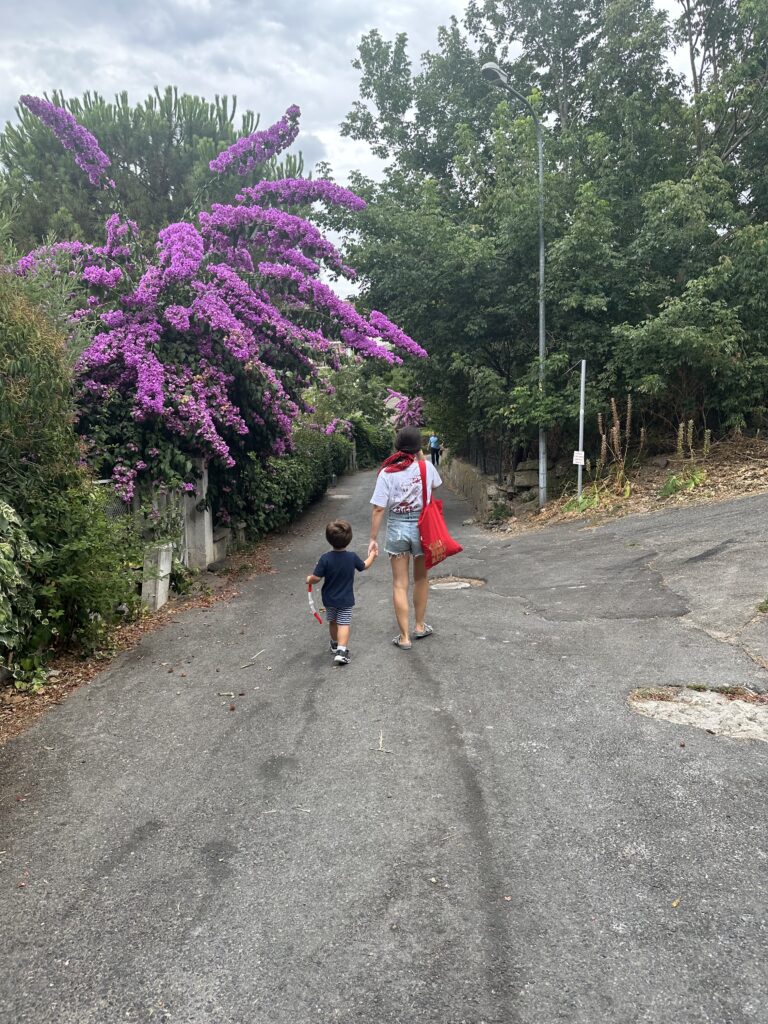
I grew up with the island’s horse-drawn carriages, the smell of pine trees and the sea, the sound of the ferry approaching the pier, and the familiar faces that seemed to belong to the island.
Growing up in Burgazada meant a particular kind of freedom. My mother could leave me with a friend, and we would spend the day wandering and playing on our own. When we were still very small, we would walk to the bakery to buy bread, then stop by the toy shop for chewing gum, and perhaps end up at the ice-cream shop. The shopkeepers were always the same familiar faces. The island felt safe enough to let you go, yet small enough for everyone to know where you belonged.
Summers were long and full of life; winters were quiet and almost empty. Once the schools opened, the summer residents would return to the city, and the island would slowly become quieter. Then came the melancholy of autumn.
Even the stomach ache of the first day of school carried, for me, a little of the pain of leaving the island behind.
And then there is Turan Amca.
For nearly sixty years, he has been making and selling galeta on the island. When I was a child, and even now, his voice could be heard calling through the streets:
“Tazeler galeta!”
“Fresh galeta!”
It is a small sound, but it means a lot.
Sait Faik’s Island
Burgazada is also inseparable from Sait Faik Abasıyanık.
The writer lived here for much of his later life, and the island became one of the central characters in his stories. He wrote about fishermen, workers, shopkeepers, children, animals and the people he encountered in the streets. Burgazada was not simply a backdrop in his work; it was a living world.
He describes the island as a place where he could live quietly, among what he called “honest people”, spending his days fishing and walking the island’s quiet paths.
Perhaps this is why Burgazada and Sait Faik feel so inseparable.
He did not romanticize the island from a distance. He noticed its ordinary people. Its fishermen. Its streets. Its dogs. Its loneliness. Its generosity.
Lian’s Burgazada
Kalpazankaya Restaurant
Tucked away on the far side of the island, Kalpazankaya has been a Burgazada institution since 1959. Family-run for three generations, it is known for its spectacular sunset views, meze and its traditional kuzu tandır, prepared in the same way since the 1960s.
Dilek Köfte
A much more modest, local spot, Dilek Köfte is the kind of place you go to without expecting anything fancy, just a simple table, good köfte, fried zucchini, french fries, croquettes and the easygoing atmosphere of island life. It is one of those unpretentious places that feels very much part of Burgazada’s everyday rhythm.
Yasemin Restaurant
Right by the sea, Yasemin is one of the island’s classic spots for a long lunch or dinner. The setting is as much a part of the experience as the food: a table by the water, a few meze and good fish in the middle and the feeling that there is nowhere else you need to be.
Sinem Dondurma, Roma Dondurma & Yunus Dondurma
No Burgazada summer is complete without ice cream. Sinem Dondurma, just steps from the pier, has long been one of the island’s favourites, while Roma Dondurmacısı brings its own old-fashioned charm to the island. And then there is Yunus, the beloved mobile ice-cream cart, an island tradition in itself.