



On the Art of Gathering
Maria Elena Fabbrini is the founder and creative director behind Tavolata, a creative culinary studio and supper club experience built around the simple act of sitting down together. What began as intimate dinners during the uncertainty of the pandemic has evolved into carefully composed gatherings. A place where atmosphere, food, and connection carry equal weight. Each table becomes a shared experience, one you take your time with, shaped by what’s passed around and what’s said in between, leaving a trace when it’s over.
by Anamaria Roa
Some ideas arrive fully formed. Others take shape through noticing what feels absent. Tavolata belongs to the second category.
The project began in the spring of 2020, while Maria Elena was living in London, a period marked by distance, uncertainty, and heightened awareness of how much was missing. Through supper clubs in London and New York, she encountered a way of gathering that felt unfamiliar in Italy at the time. “Before Covid, we were pretty shy about sharing a table with strangers,” she recalls. “It was more an international idea.”
Even then, she sensed a shift coming. “I always thought that after the pandemic, people would have been more open, even in my own country. And that’s exactly what happened.”
What followed was Tavolata: among the first supper club concepts in Italy, shaped less by trend than by instinct.
Hospitality, Refined
At the core of Tavolata is a personal understanding of hospitality shaped by restraint. Maria Elena’s idea of luxury is precise rather than expansive.
“Luxury is in simple things, but details make it unique,” she explains.
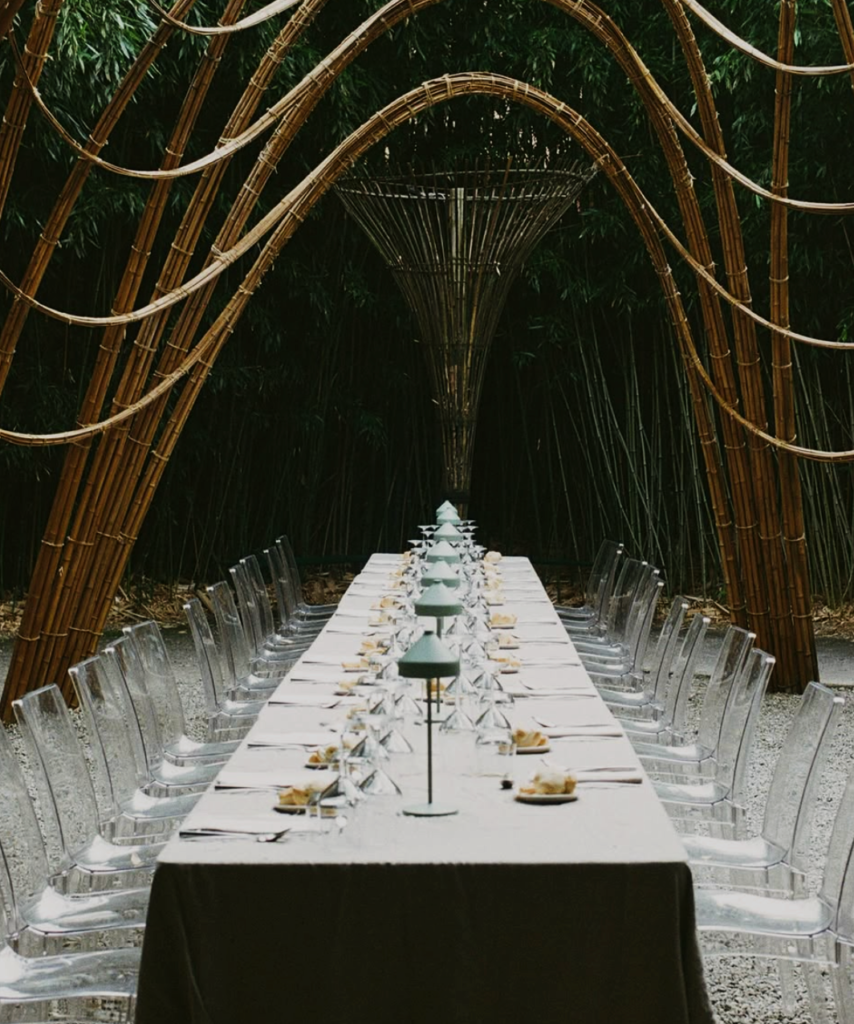
Oversized gestures are avoided in favor of careful choices. “You will never find huge flowers on my tables,” she says. “I’d rather have a few extremely beautiful ones.” Lamps are selected deliberately. Linen comes from local artisans. Each element earns its place. “Quality is more important than quantity, always.”
This approach extends beyond aesthetics.
Tavolata has never positioned itself as a service in the conventional sense. It functions more as an invitation. “Our target are mainly designers and people in the creative industry—architects, beauty seekers,” she says. “But that beauty must be genuine.”
When the Table Settles
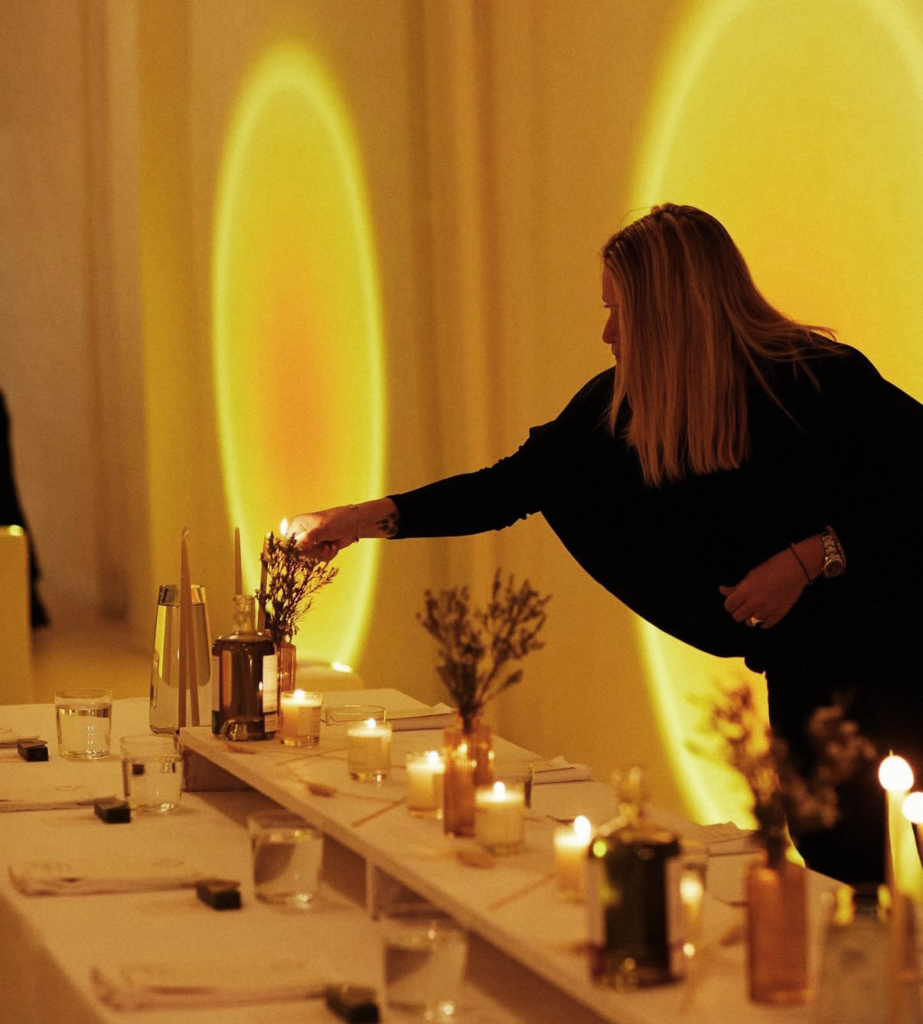
During every Tavolata evening, there is a moment Maria Elena looks for. It arrives without announcement. Conversation loosens, voices overlap, time stretches. The room finds its pace. What started as a carefully set table begins to feel natural, held together by presence.
At that point, the gathering stops performing and begins to exist on its own terms.That sense of ease is deliberate. It is the result of choices made long before guests arrive.
Beauty in Simple Things
Restraint has always been central to Maria Elena’s way of working. “I believe that beauty is in simple things,” she reflects. “A simple thing can be extremely delicate, beautiful, and unique.”
What feels effortless to the guest is supported by complexity behind the scenes. “Complexity is behind: in the projects, in the ideas, in the creation of a piece of art, a table setting, a beautiful location.” The work is largely invisible, but essential. “Everything, from the moment an idea is created,” she says. “It is important to put effort, passion, and positive energy into every step.”
Together, these layers shape what she considers true luxury, not spectacle, but coherence.
Soft Architecture
The Tavolata studio is composed by core members plus external synergies of collaborators that we esteem, such as event managers, wedding coordinators, designers, and service professionals. What Maria Elena looks for in collaborators is uncomplicated: “Passion and positivity.”
In practice, the table becomes a form of soft architecture. Linen, light, temperature, and color are shaped around the client and the desired mood.
“Everything is tailor-made,” she explains. “We follow the desired mood.”
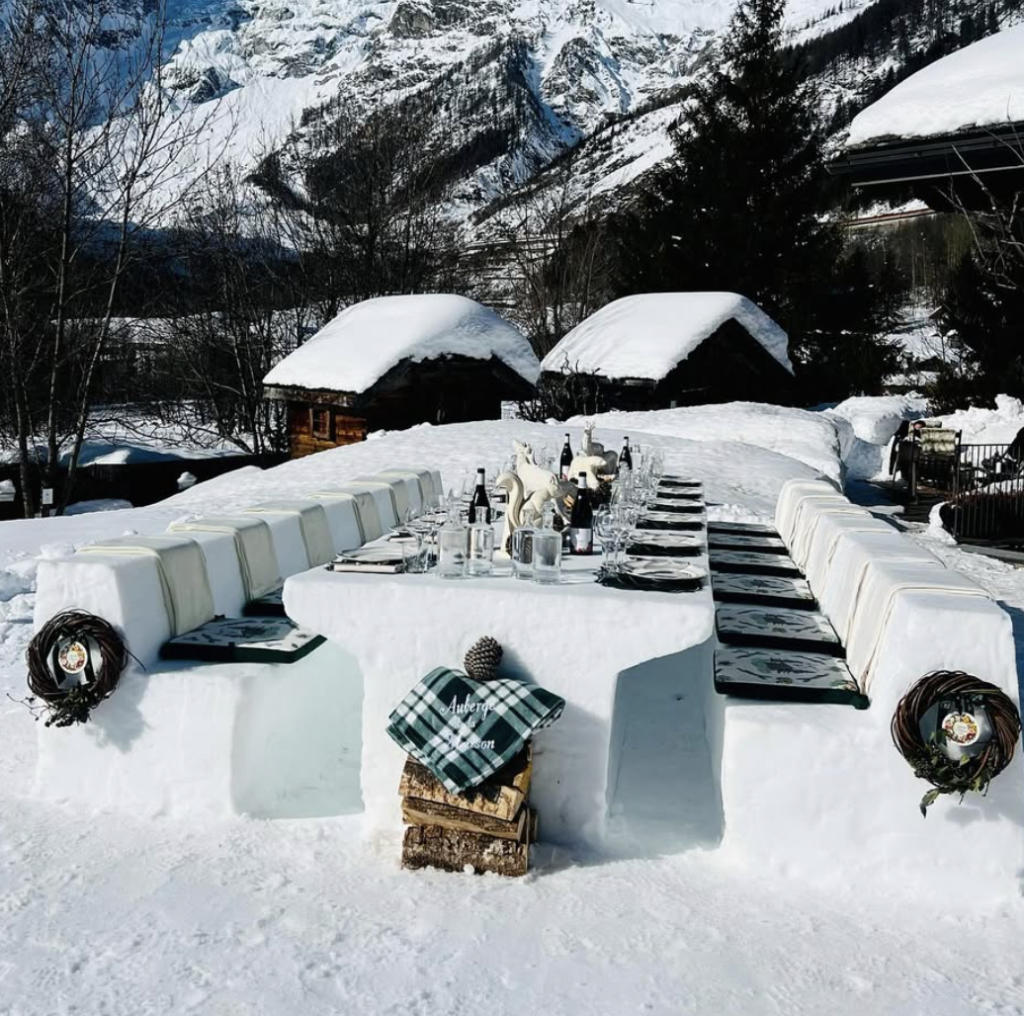
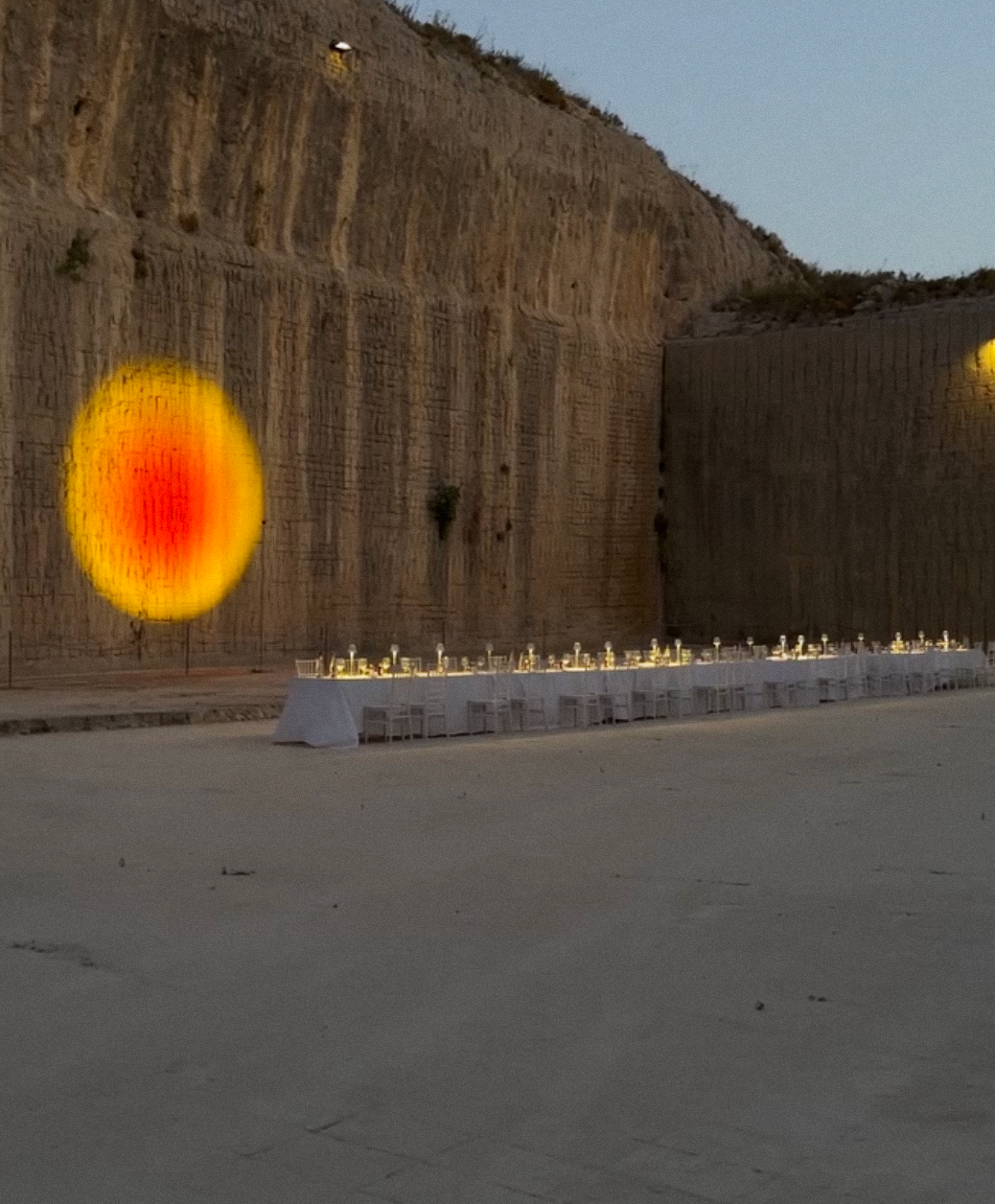
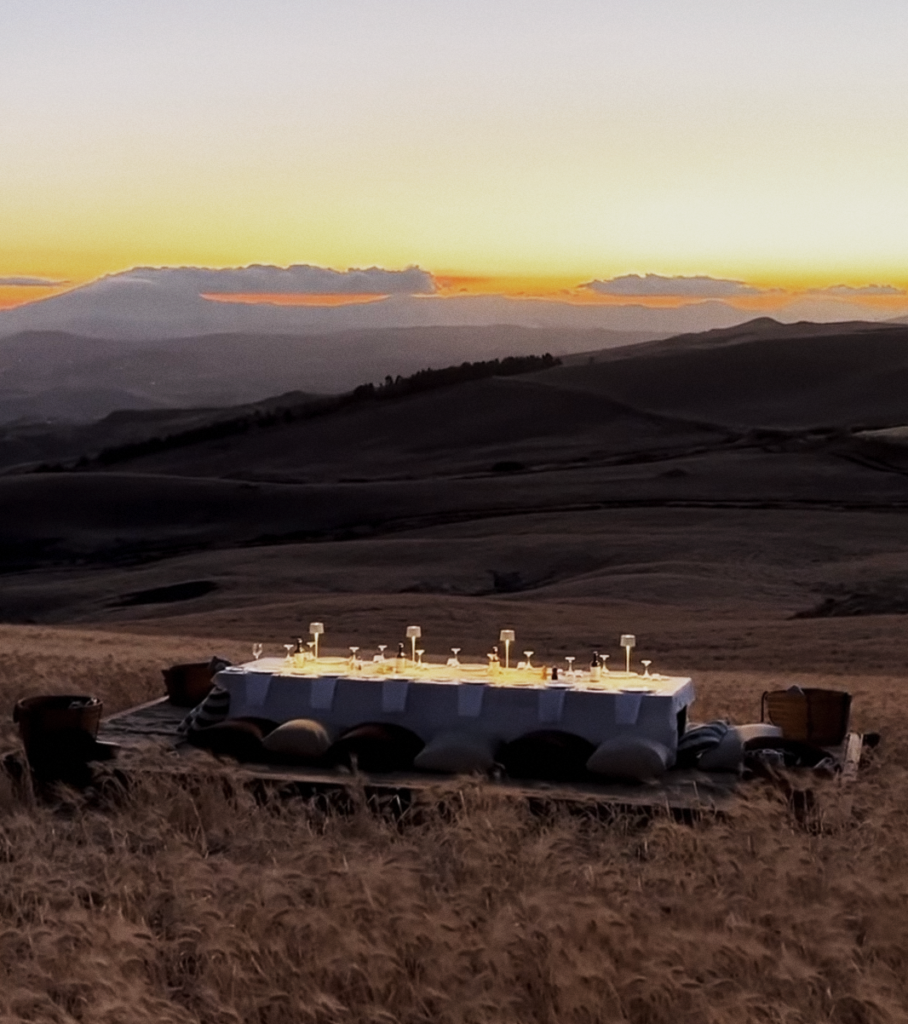
Some of Tavolata’s most memorable gatherings have taken place in natural settings: a table set in the snow, dinners among Sicilian wheat fields, a quarry in Noto. “They all required a lot of preparation,” the studio shares, “especially the snow table we created in Cortina this December. It took us four days—from collecting the snow to compaction and aesthetic processing.”
Carrying It Home
As the evening draws on, plates are cleared and candles burn lower. Conversations stretch past their planned rhythm. Guests linger. Voices soften. The table, once meticulously set, now holds traces of the night: folded napkins, empty glasses, a shared familiarity.
At the end of a Tavolata gathering, the feeling Maria Elena hopes guests carry with them goes beyond satisfaction. “That food and service were great,” she says, “but that they also felt part of something… something memorable.” More than anything, she wants them to feel at ease. “Like a home away from home.”
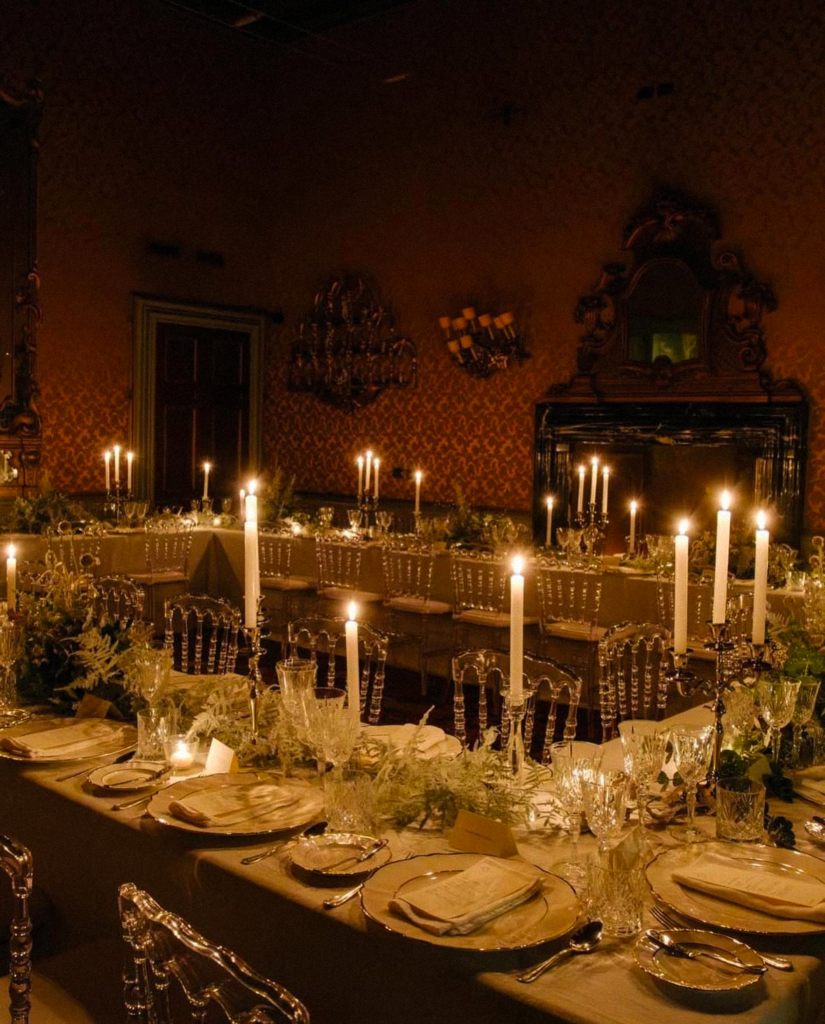
As Tavolata enters its next chapter, with plans for a permanent location, focus on private events and continued international work, the philosophy remains steady. “We are still the same,” Maria Elena says, “but more sophisticated. Design is a big part of us now, and we want to explore that more.”
The pace, however, does not change. Tavolata continues to move slowly, guided by care and attention. It is an invitation within a busy world, a table set with intention, and enough room for people to truly meet.
