



In Pursuit of Feeling: The Passion Principle
Feeling as the foundation of hospitality. It echoes a growing cultural question: how can places, brands, and experiences become more human by paying closer attention to emotion?
by Anamaria Roa
“Design Hotels’ new Further study, The Passion Principle, starts with a simple but powerful question: what keeps us human in a world that feels more automated every day?”
It may be a report about hospitality, but its reach goes far beyond hotels. It looks at creativity, emotion, and the ways we connect through care. Passion is what ties it all together, not as an abstract idea, but as a way of paying attention.
The study shows that hospitality is changing. It is moving away from offering perfect, finished experiences. For years, hotels built their identities around moments made to impress, every gesture rehearsed, every encounter managed. But when everything is planned, very little is truly felt.
Across the world, hotel founders, designers, travelers and thinkers are gathered to ask what hospitality means today. Their answer is clear: the future belongs to feeling. Spaces come alive not through polish, but through presence and care.
From Perfection to Participation
Perfection is losing its charm. What we remember most are the experiences that felt alive, open, human, and unfinished in the best way. A hotel can be a tool for connection. A place where guests can immerse themselves in the beauty surrounding them.
Across cultures, this desire is growing. We look for the human hand behind what we experience, the detail that reveals care.
Passion as Practice
Passion, the report suggests, isn’t a rush of feeling but instead a gentle rhythm of care. It lives in the everyday, in the way we pay attention, in how we give meaning to what we do. When work becomes ritual, emotion finds its shape.
At the same time, passion protects us. In a world ruled by output and deadlines, it restores purpose. It asks us to go slower, to feel deeper. The most powerful work still comes from those who choose to care.
The Role of Technology
Technology leads the conversation now.
Artificial intelligence and automation guide how we travel, communicate, and create. Yet the more seamless life becomes, the more we miss what cannot be replicated — a voice, a gesture, a shared moment of care.
Used well, technology can open space for feeling. It can take care of the repetitive, leaving room for what makes us human. The task is not to turn away from it, but to shape it with intention. Because in a digital world, true luxury is still human.
The Passion Principle highlights examples where technology serves feeling rather than replacing it. Black Tomato’s “Pursuit of Feeling,” for instance, uses AI to design journeys around emotion, asking travelers how they want to feel, revitalized, free, curious, before curating experiences that reflect those moods. The goal is a combination of efficiency and empathy.
Designing for the Unplanned
One idea stands out in The Passion Principle: surprise. We say we want it, yet our lives leave little room for it. We plan, we optimize, we control. But passion appears only when we let go.
Genuine hospitality understands that feeling. It lets things unfold. It allows for the imperfect and the unexpected, the moments that can’t be scripted. A space that breathes doesn’t need to impress. It simply needs to respond.
A Framework for Connection: Flow, Invitation, and Becoming
At its center, The Passion Principle introduces a new model for hospitality built around three elements. Flow, Invitation, and Becoming.
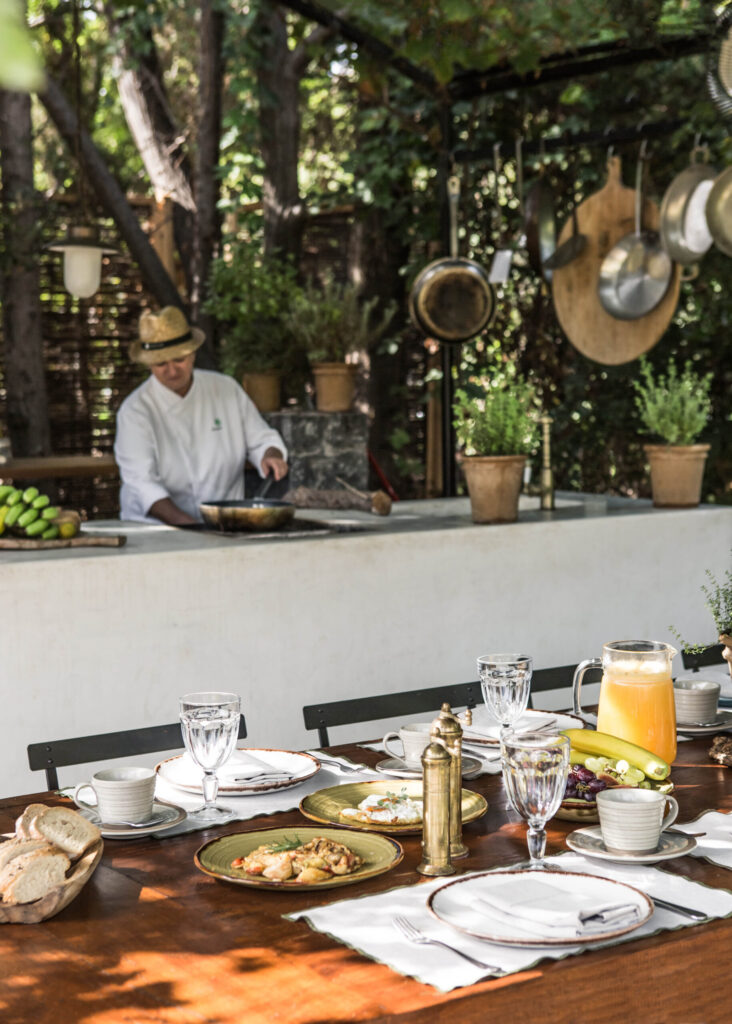
Flow is where connection begins. It’s the movement of people, materials, and stories through a place. In Crete, for example, the Phāea Farmers Program turns hotel staff into seasonal farmers, closing the loop between land, community, and hospitality. Here, staying becomes a form of giving.
Invitation transforms design into dialogue. At STRAF Hotel in Milan, The Space Between reimagined the hotel lobby as a living installation, inviting guests to shape the space themselves. It’s hospitality as collaboration, where the environment responds to participation.
Becoming is what unfolds when people and places influence one another. In Kyoto, a guesthouse invites visitors to take part in morning tea ceremonies with local potters, where each cup is shaped by hand and conversation. The boundary between host and guest disappears; both leave changed, carrying traces of each other’s worlds.
The Emotional Blueprint
At its heart, The Passion Principle redefines what care means. It’s not service or performance, it’s presence. The ability to make someone feel seen, comfortable, and connected. It’s a design language built on empathy, not control.
This vision extends beyond hotels. It belongs to every craft that centers on people. From design and writing to food, architecture, and publishing. Each one hosts experiences shaped by attention and feeling.
That may be the report’s most lasting truth: the future of hospitality is not about excess, but awareness. About spaces that breathe, and gestures that carry meaning. In a world that prizes speed, passion remains the most human act of all.
