



The Market Has Entered Its Hosting Era
Design-led markets are reworking the grocery experience, softening its edges and bringing more intention to the everyday. In that process, a corner shop can feel unexpectedly welcoming.
by Anamaria Roa
You might not expect a grocery store to change your mood, but a new wave of markets is trying to do exactly that. What if the neighborhood market stopped behaving like a fluorescent maze of choices and started acting more like a host, guiding us through the essentials with a sense of calm, care and taste?
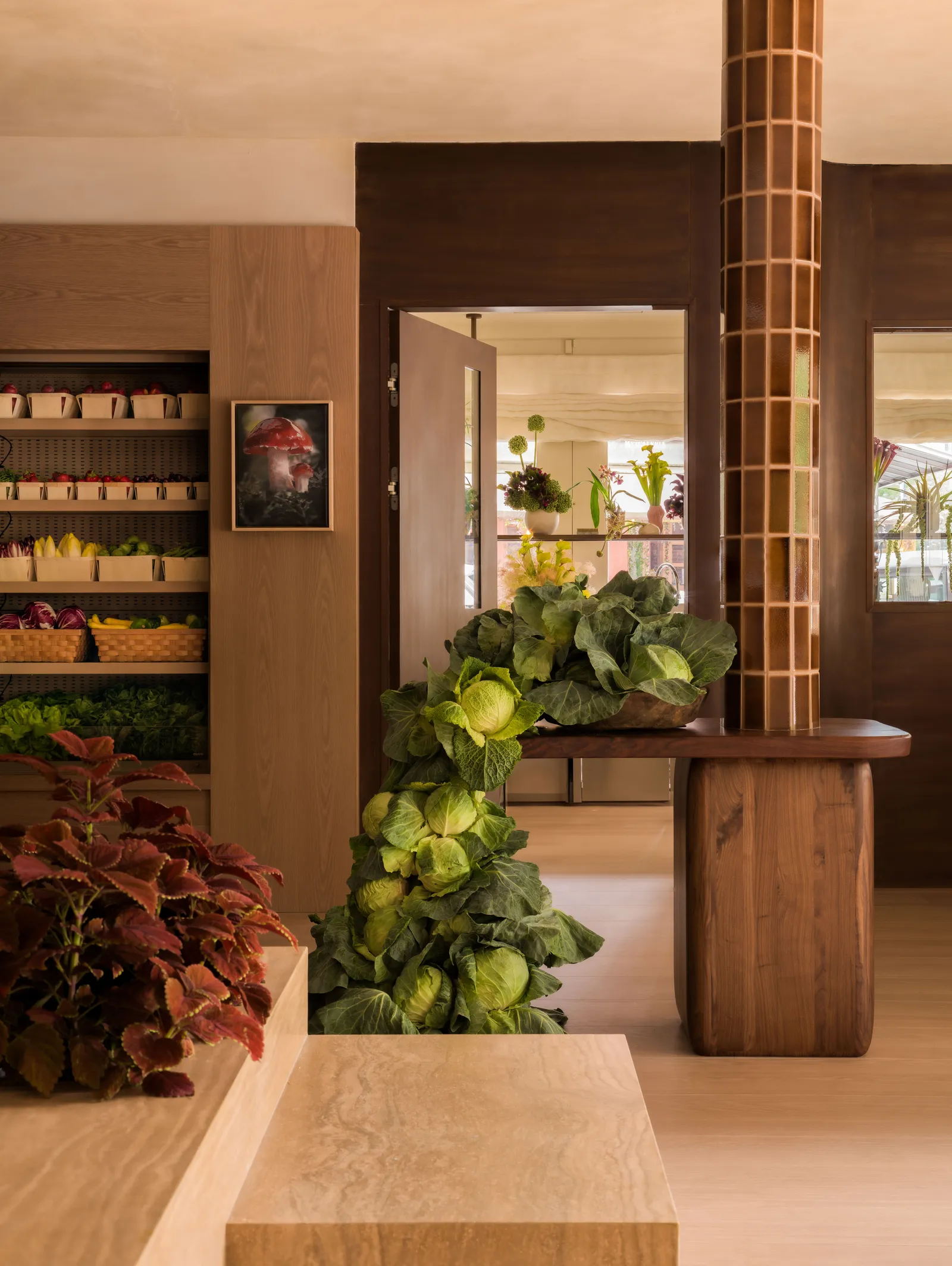
For example, consider New York’s most anticipated new grocer, Meadow Lane. Recently opened, it seems intent on asking that very question. It is, technically, a grocery store. Yet the experience feels different the moment you step inside. Prepared foods sit beside produce. The air feels slower. Everything, from the light to the shelving, signals that someone thought about how you might want to move, pause, choose.
It is grocery, yes. But it is also something else: the idea that hospitality can live in the most ordinary corners of life.
The Rise of the Considered Market
The appeal of Meadow Lane lies in how it changes your state of mind. The lighting is gentler. The layout eases the rush. Even the produce feels presented rather than stocked.
Markets like this reframe grocery as something closer to ritual. They understand that food is personal, and that the spaces where we choose it shape how we move and feel. A store that anticipates your needs, rather than overwhelming you with them, begins to feel less like a vendor and more like a host.
An Aesthetic of Ease
These markets share a clear design language. Warm tones. Open pathways. Wooden shelving in place of cold metal. Refrigerated sections that stay bright without feeling clinical. Prepared foods displayed with restraint, not excess.
The effect is subtle but immediate. People move differently. They linger by choice. Design becomes an invisible form of hospitality, focused on welcoming.
Curation as Story
Selection matters too. Heritage grains, regional pastas, small-batch sauces, produce tied to place and tradition. Labels that explain origin and method. Ingredients that carry memory.
Here, grocery becomes narrative. A pantry that reflects people, culture, and care. Even a shelf can make someone feel seen.
The Everyday, Reconsidered
Spaces like Meadow Lane point to a simple idea. When the everyday feels better, life does too. Grocery is constant. That frequency gives it weight.
In its most thoughtful form, the market becomes a neighborhood anchor.
Not just useful, but attentive. Not just functional, but human.
In that attention, grocery becomes hospitality.
