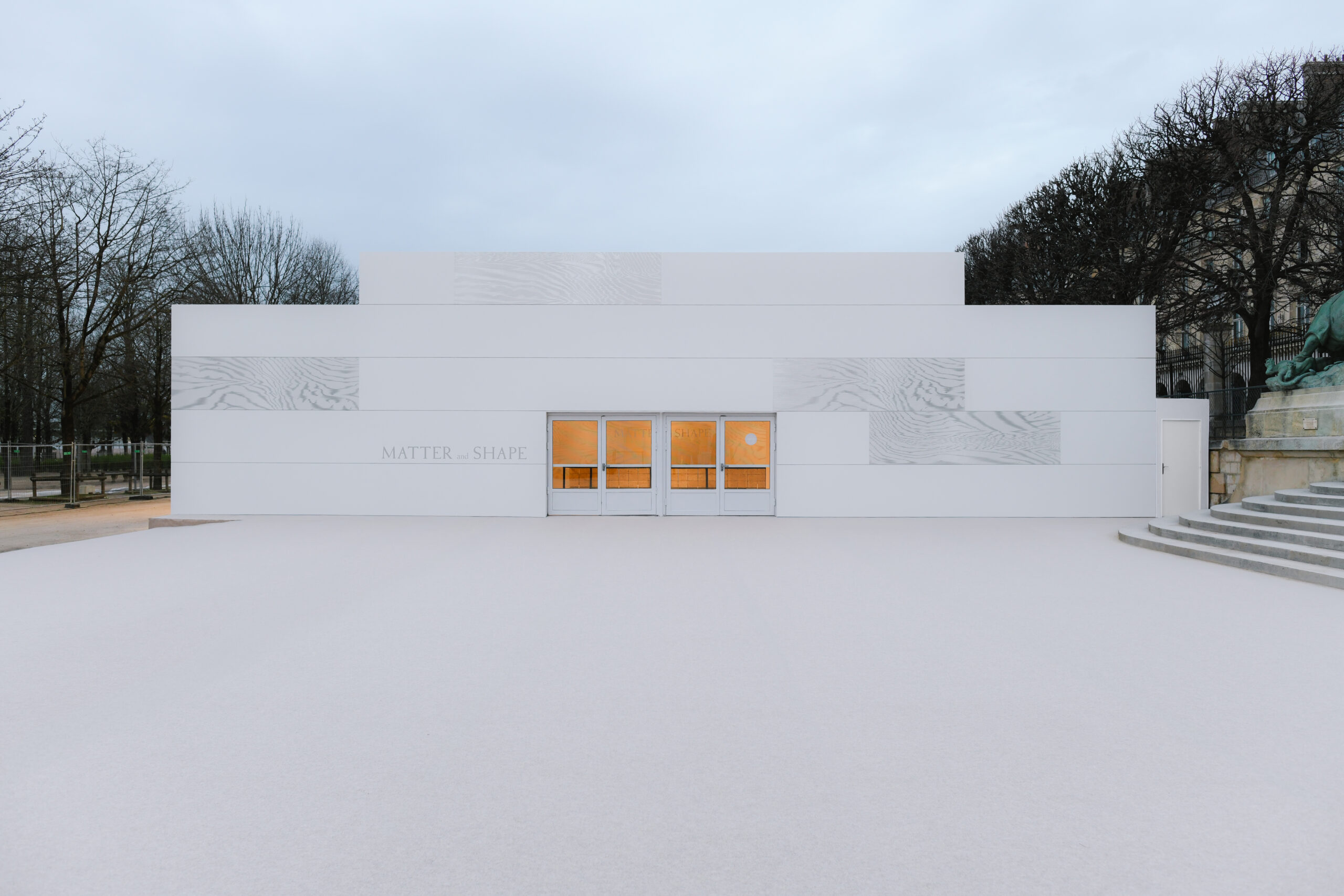
MATTER and SHAPE, the design salon led by Dan Thawley alongside founder Matthieu Pinet, has quickly become one of the most thoughtful gatherings on the design calendar. This year, though, the real star wasn’t a single designer or object, but the fair itself.
by Lina Temelli
At Centre, we chase good design. It’s a bit of an obsession, if we’re honest. Hunting, detailing and appreciating.
It usually starts with noticing the little things, the details that change the way we move through the world and relate to it and to others. The way we fill our spaces becomes its own kind of language, whether we realize it or not.
So last week, when I visited the historic Jardin des Tuileries during Paris Fashion Week, it felt like an unexpected extra treat to discover that the real star of MATTER and SHAPE was, fittingly, matter and shape itself.
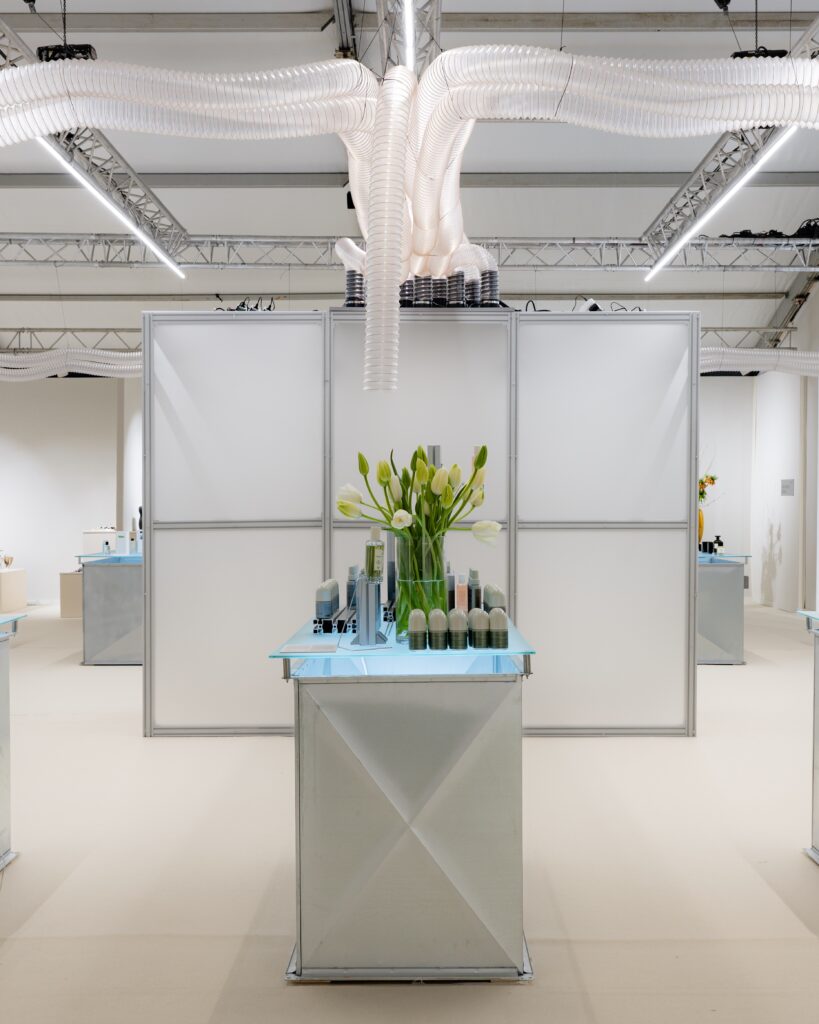
Now in its third edition, the curated design salon has quickly become a must-see moment on the Paris cultural calendar. The exhibition shell itself becomes part of the experience. Walking through the fair, it was the small details that kept catching my attention. I started noticing how much thought had gone into everything: the booths, the signage, the cafés, and the spaces in between. Along the way, a few pieces stopped me in my tracks.
Anyone familiar with design fairs will know how rare this is. Too often, exhibitions take place in vast neutral halls that feel temporary and cold. MATTER and SHAPE approached it differently. The fair felt warm, inviting, almost cozy, more like stepping into a well-designed interior than a trade exhibition.
Within this setting, the designers’ work felt particularly at home. Sculptural furniture, experimental objects, and collectible pieces appear with intention, each part of a larger spatial composition.
Beyond the booths, collaborations introduce moments of pause and play. A Balbosté culinary residency serves vibrant, sculptural dishes within modular seating that shifts throughout the day, turning hospitality into another design element.
Nearby, Bang & Olufsen hosts a listening lounge and café in collaboration with Home in Haven and Atelier September. The centerpiece is a bar shaped like an oversized B&O stereo, complete with movable volume controls, blurring the line between design installation and social space.
Things that Caught My Eye
While the architecture of the fair left a lasting impression, several pieces and installations also stood out.
Justine Ménard: Glass pieces that feel like they’ve been gently stretched mid-air, soft curves folding into themselves with a kind of fluid rhythm. The lines and silhouettes feel lifted from a fairytale, something you’d only expect to find at the bottom of the ocean. Simply stunning.
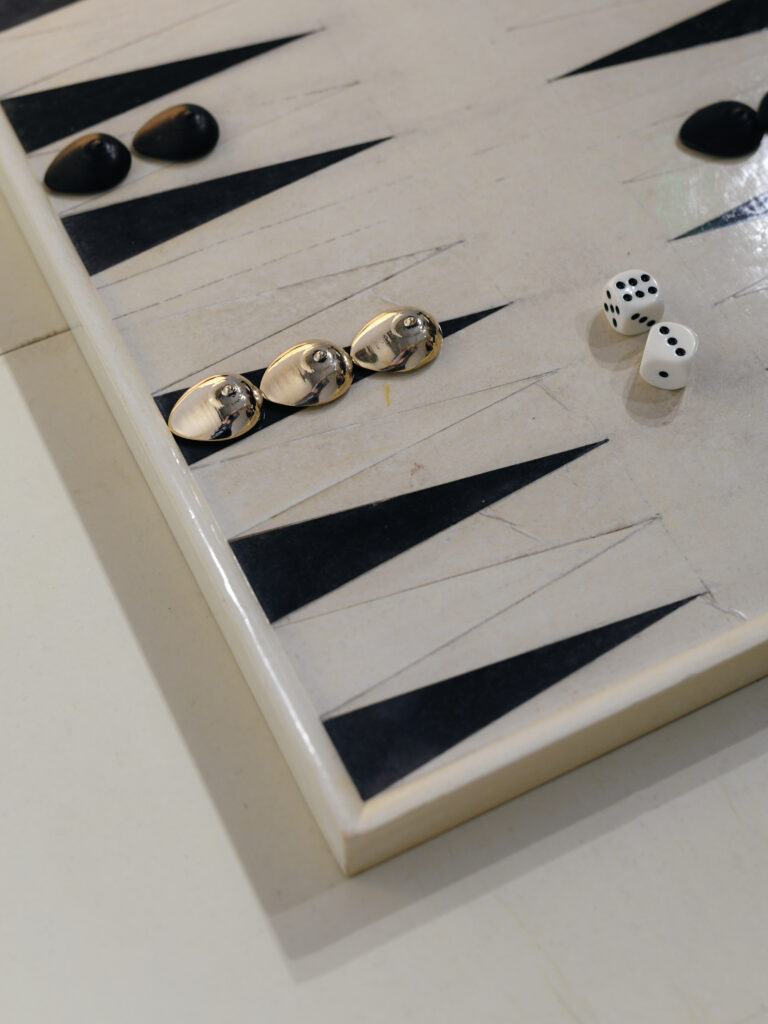
Piccoli Smalti:Abackgammon drew particular attention. Part of a collection combining parchment and brass furniture with cloisonné bronze details and the designer’s “Forget Me Not” motif, the backgammon set transforms a familiar game into something sculptural. Call me crazy but it looks pretty sexy.
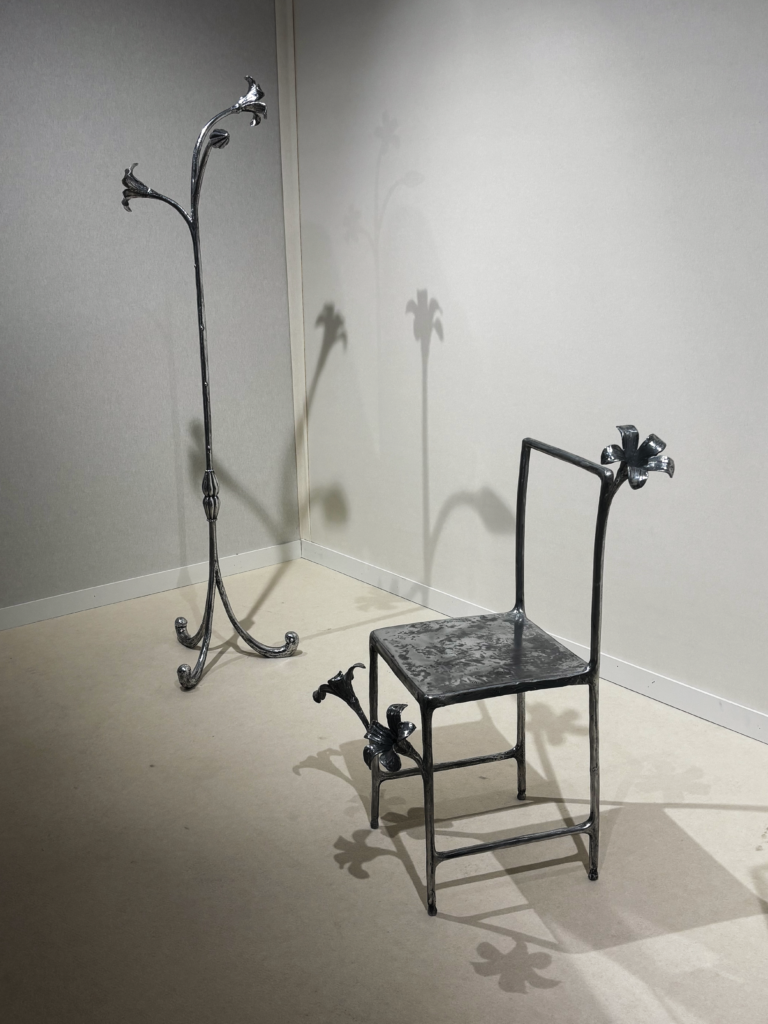
Conie Vallese, Bloom Chair: A steel chair and coat stand that looked like they had secretly sprouted lilies overnight. Thin stems rise from the frame and bloom at the corners, turning otherwise industrial furniture into something that feels halfway between garden sculpture and somewhere you’d happily hang your coat.
BOTHI, Meadows Collection: Deep green walls stamped with tiny botanicals, a fringed lamp that felt more like something grown than made. Somewhere between a composed interior and a mirror you’d find in the middle of a forest. I’m still not sure if you’re meant to sit, admire yourself, or just stand there and take it in.
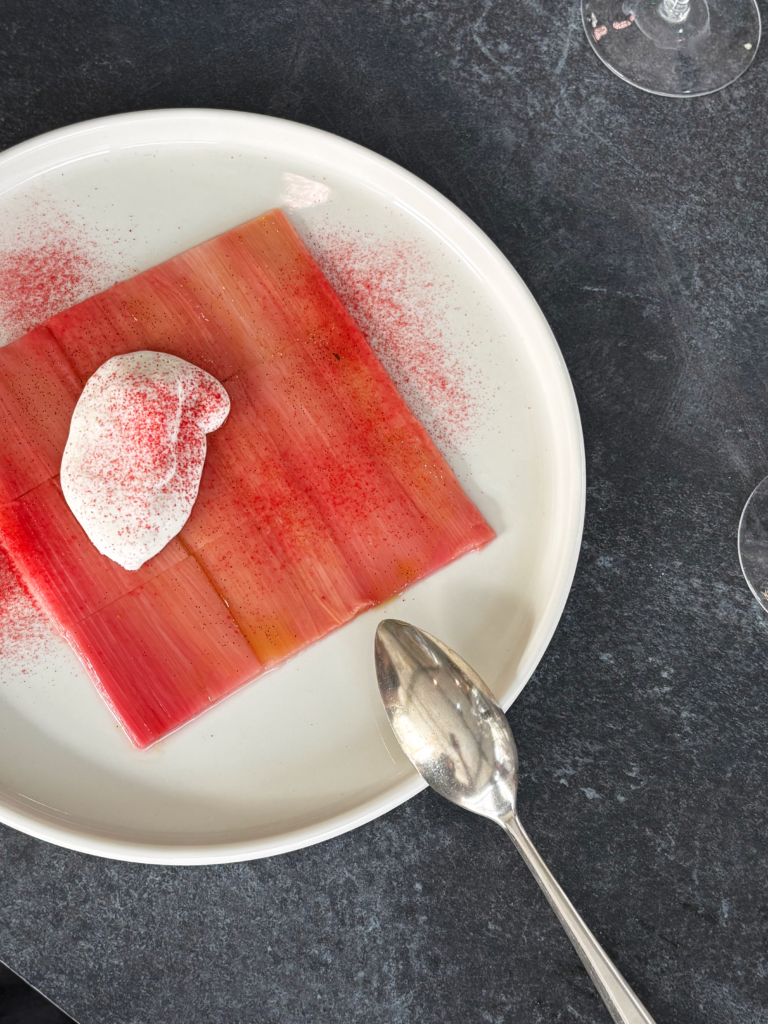
SCALE and lunch by Balbosté: at the center of the fair’s social life, a Tangram-inspired table turned dining into a design experiment. Composed of modular, geometric sections, the table could shift in scale throughout the day, moving from intimate clusters to a larger communal setting. The plates kept up. A towering slice of bread like a tiny architectural model, followed by a delicate, pink-toned rhubarb dessert dusted with powder and topped with a soft cloud of cream. Somewhere between lunch and installation. Almost too pretty to eat. Almost. Together, it brought color, rhythm and a sense of play to the space, proof that even a lunch table, when done right, can become the main character.
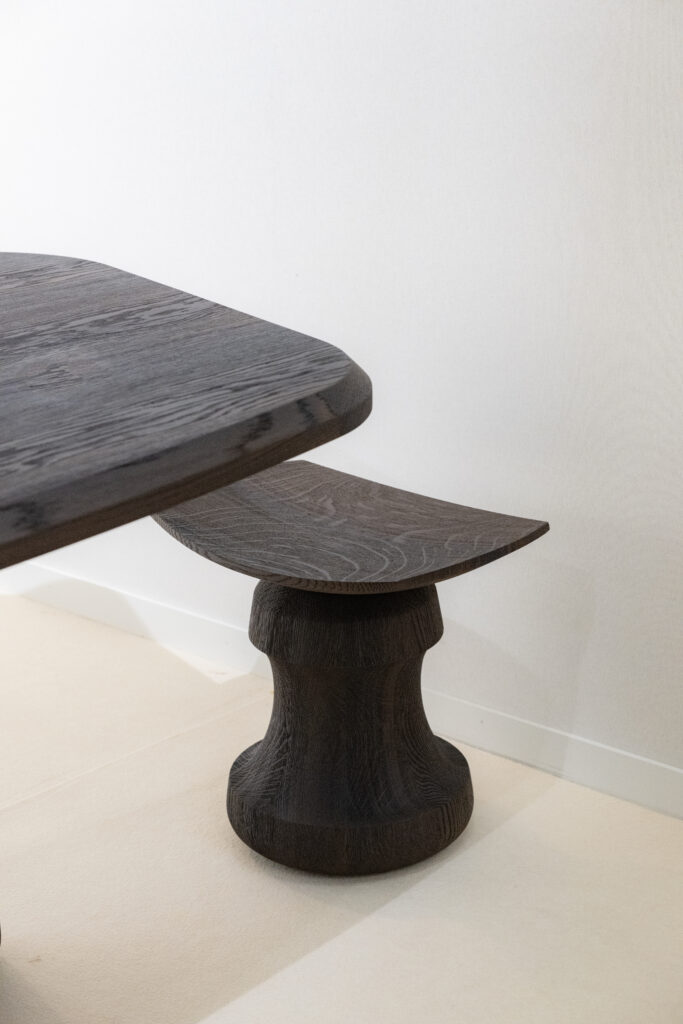
Collection Particulière: The curved wooden seat balances on a pedestal base that almost resembles a carved column or chess piece. Simple, solid, and slightly mysterious. It honors the integrity of the original material, and we love that.
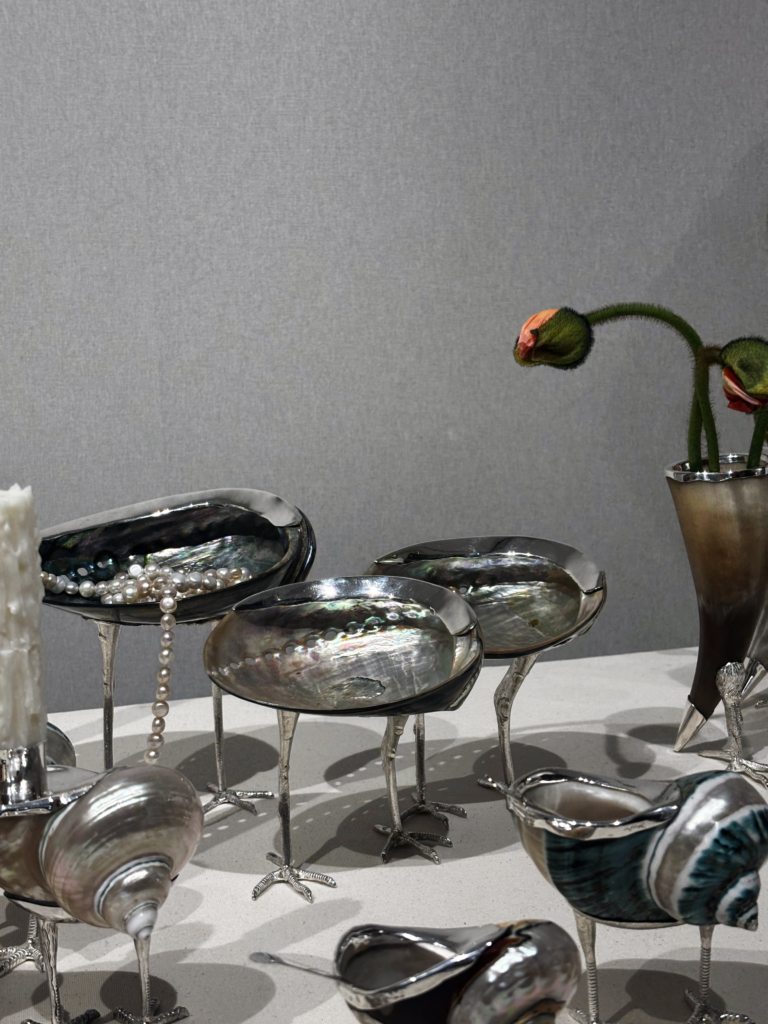
Omer Gilony X Tavares 1922, The Bird Edit:Shells perched on spindly silver legs, somewhere between a found object and a small, watchful creature. Equal parts ornamental bowl and still character study. I wasn’t entirely sure if I was meant to place something inside, or wait for it to move first.
Verre d’Onge: a family of softly colored vases in elongated forms. Muted reds, dusty blues, warm ambers, and smoky blacks line up like a still life study in proportion. Simple shapes, subtle tones, and just enough personality to make you want at least three of them at home.
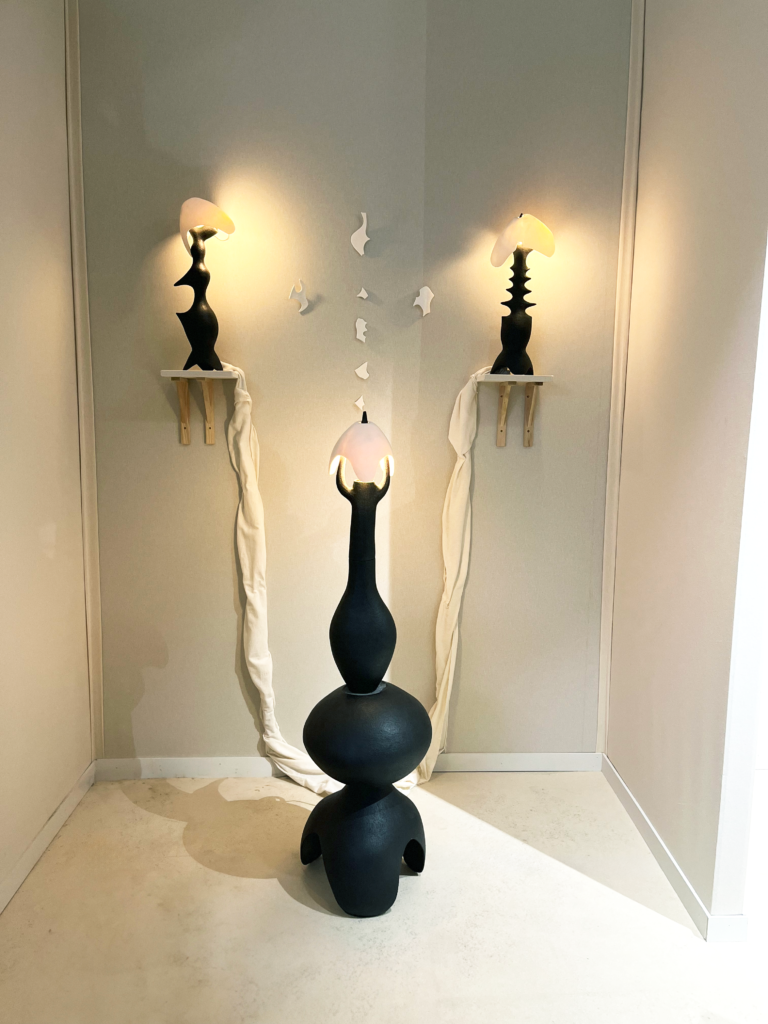
Abid Javed: Ceramic forms that feel like they’ve been pulled straight out of a microscope, that sit somewhere between organism and object. Equal parts science experiment and sculptural daydream. I kept thinking they might still be growing, slowly and quietly, when no one is looking.
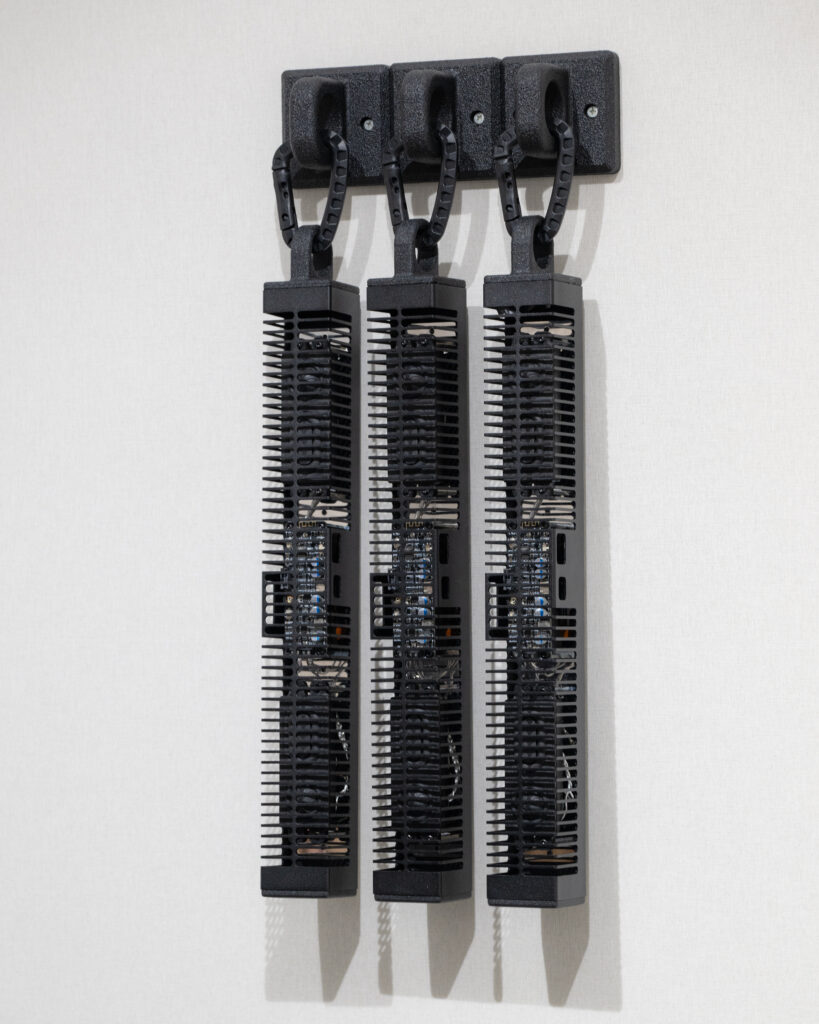
Di Salvo Sound Bar: A little technical, a little brutalist, and surprisingly elegant. Unlike most hi-fi speakers, it’s portable, something you can move with, live with, and reposition as needed. Created in Milan by Giorgio Di Salvo, the piece carries the imprint of his creative community, shaped through ongoing exchanges with friends and rooted in the world of his listening bar. There’s a certain bareness to it that makes the whole thing feel even more intentional. The kind of object that feels like it should be turned on, even if you’re not entirely sure how.
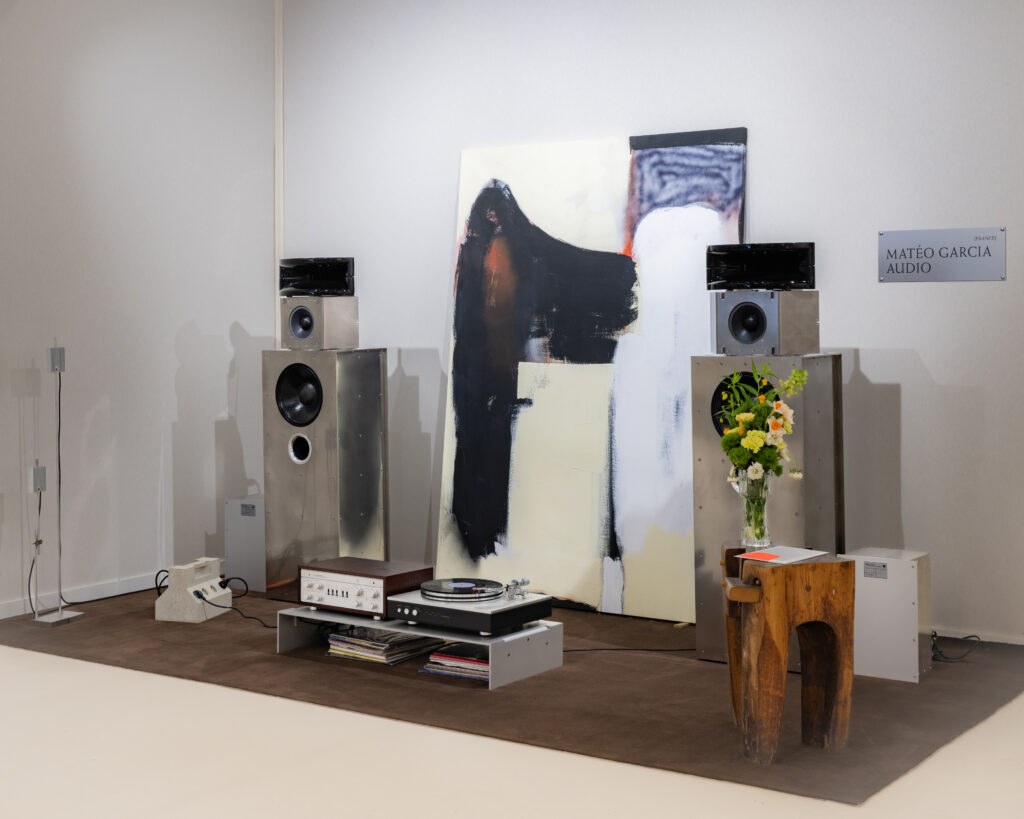
Mateo Garcia: There’s a certain restraint in the design, almost austere, until the sound comes through and softens everything. Listening felt indulgent in the best way, the kind of experience you don’t quite want to interrupt.
By the time I left the Tuileries, that idea felt sharper, almost confirmed. That good design isn’t always about the statement piece or the object you immediately notice. It’s in the way a space is composed, how it holds you, how it invites you to slow down, to look again.
Every detail, from the architecture to the lunch table, worked together to shape a certain way of moving, gathering, and experiencing.
And maybe that’s the point.
Lina Temelli is the Creative Director of Centre Magazine, where she shapes the publication’s visual and editorial identity. She is also the Marketing Director of Martı Hotels & Marinas, leading brand strategy for one of Turkey’s most established hospitality groups. Her work sits at the intersection of design, culture, and storytelling.
Ut tellus eleme ntum sagittis vitae et leo. In ornare quam vivrra orci sagittis eu volutpat. Proin nibh nisl coim entum id venenati numis.