



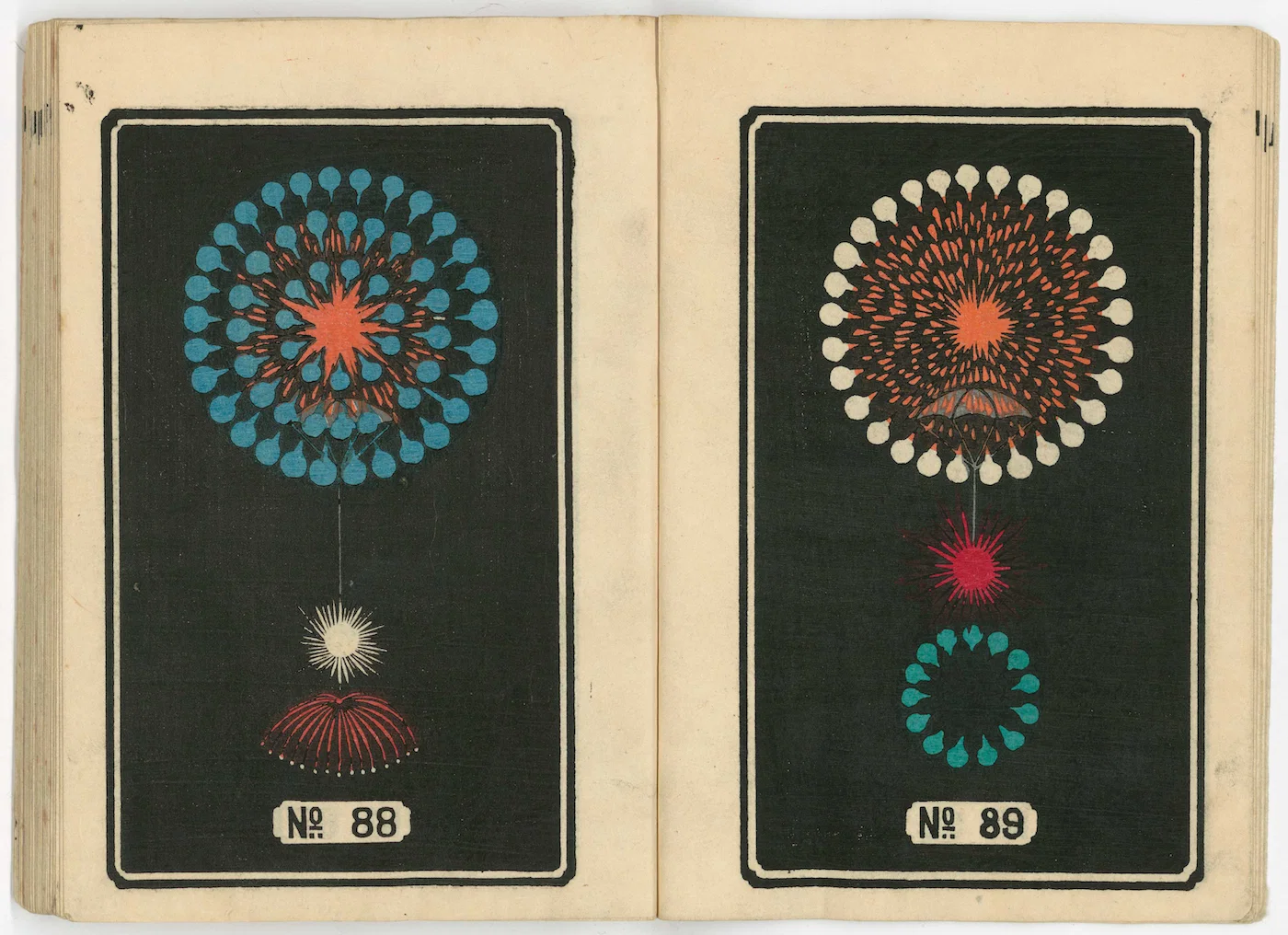
Flowers of Fire
Most things that disappear are forgotten. The firework is an exception. For centuries it has been chased, named, and catalogued by people who knew they could never fully capture it. In 1880s Japan, a group of artisans tried anyway, and the illustrations they commissioned to sell their craft became something far more lasting than a product catalogue.
by Anamaria Roa
Hanabi
Fireworks arrived in Japan around 1600 and were given a name that says everything: hanabi, written with the characters for fire and flower. Japan gave the world two of the most beloved firework shapes still used today, the peony and the chrysanthemum. The artisans behind them were called hanabishi. For them, the night sky was a garden.
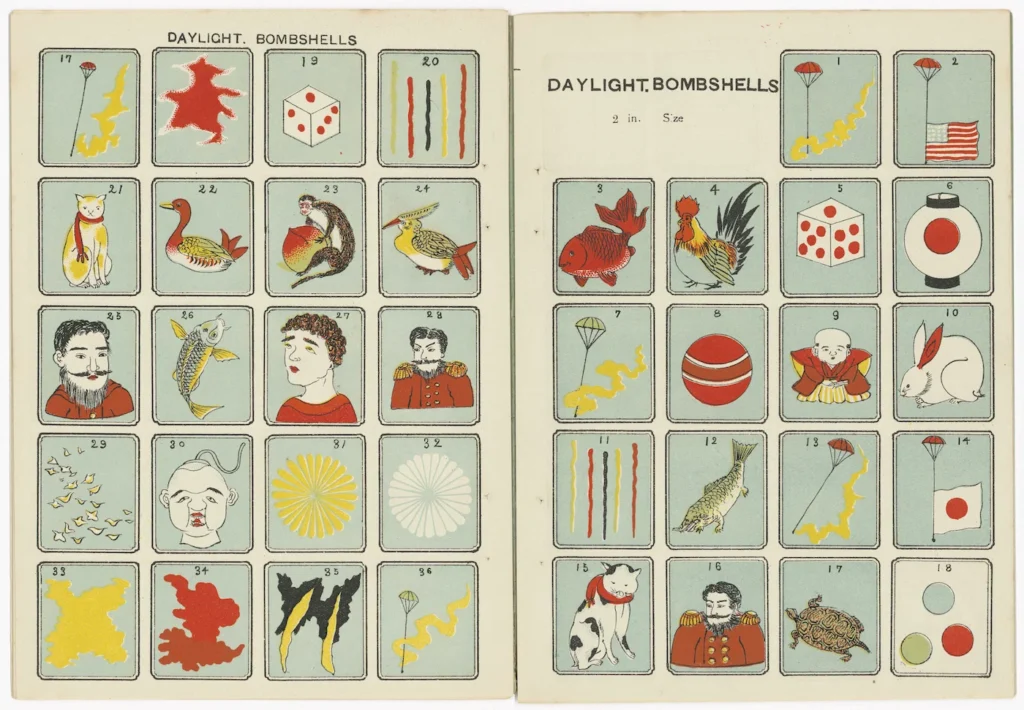
The Rivalry at Ryōgoku Bridge
In nineteenth-century Edo, two firework masters competed across the Sumida River. Kagiya and Tamaya. Crowds watching from Ryōgoku Bridge shouted their names like a sport. In 1843, an explosion at the Tamaya workshop ended it, and the family was exiled from the city. Today, people along the Sumida River still shout Tamaya into the sky. A habit that has outlasted everyone who started it.
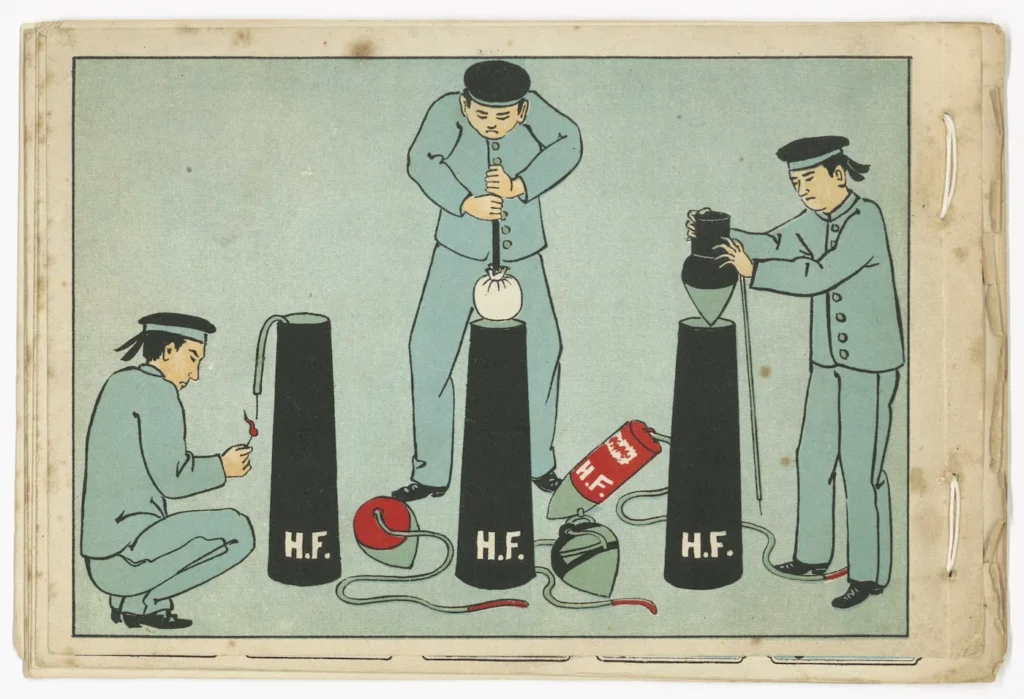
Daylight Bombshells
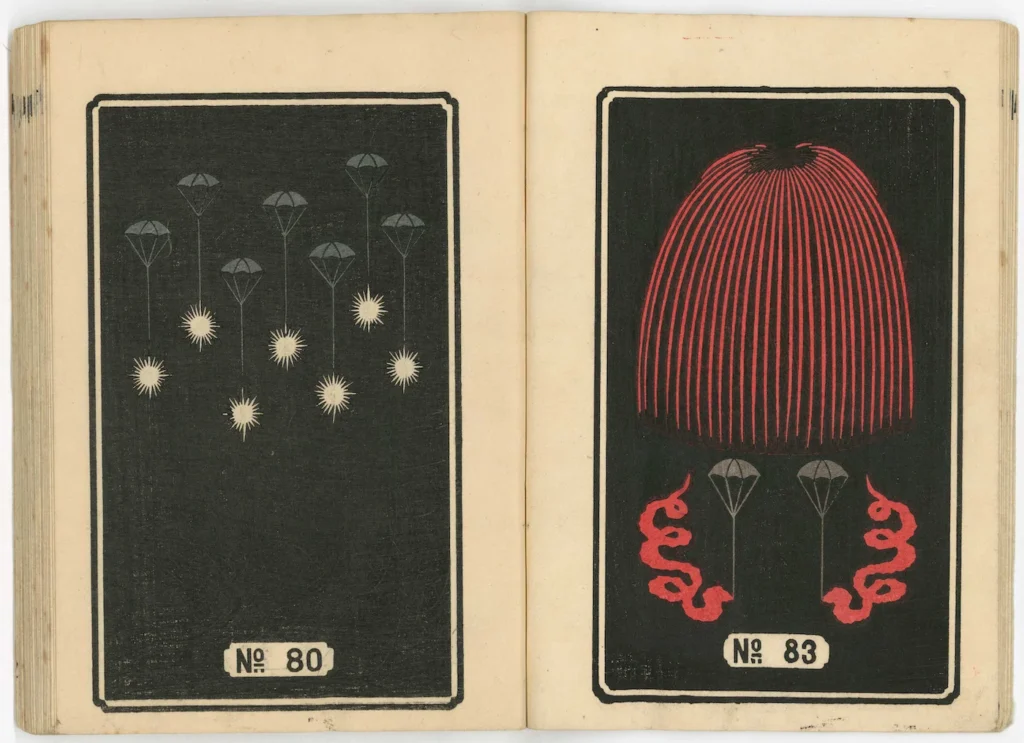
The strangest images in these catalogues are the daylight bombshells. No fire. Instead, shells that burst open mid-air and released balloons shaped like animals and folk figures. A frog drifting overhead. A jockey on a horse. A fisherman riding a sea turtle through the sky, almost certainly Urashima Taro, the hero of an old Japanese folk tale. A product catalogue that became a way of keeping stories alive.
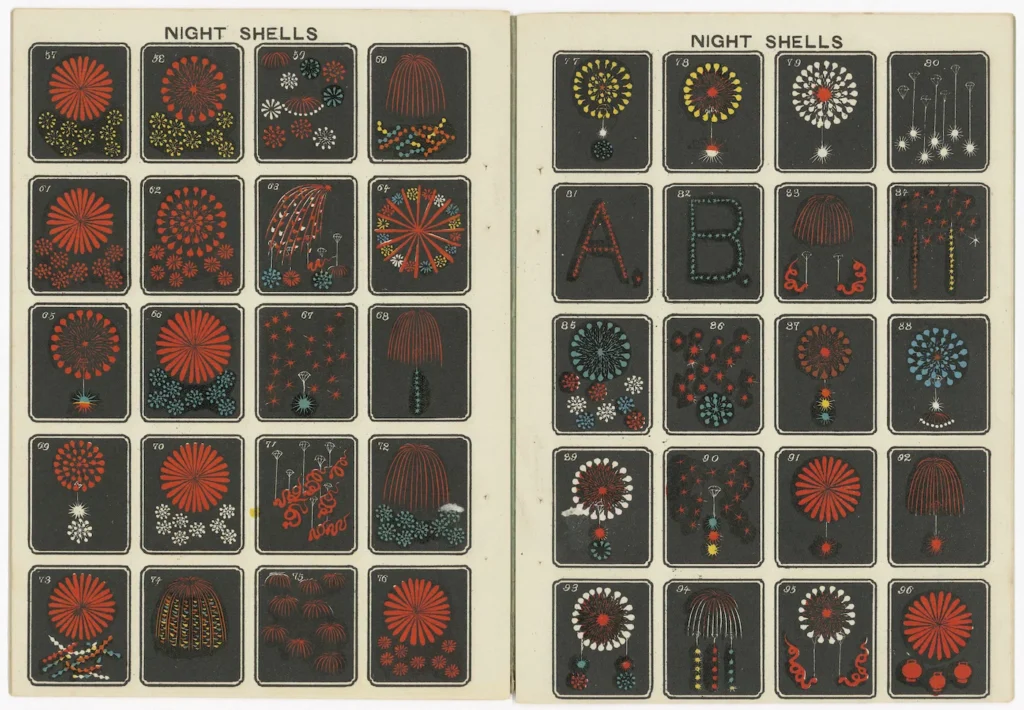
What the Artists Understood
Every firework disappears. The artists who made these illustrations understood their job was to give you the feeling of watching one, not just a record of what it looked like. The most beautiful things resist being kept. That was always the point.
Keeping the Fire
Illustrations from the Hirayama and Yokoi Fireworks catalogues, ca. 1880s. Held by the Yokohama City Central Library.
Things last because someone decides they should. The Yokohama City Central Library preserved these catalogues. Public Domain Review brought them back into the world. Organizations like these are doing essential work: keeping the past visible so the rest of us can find it. That is its own kind of fire.
